 how-to
Do New Construction Homes Need Inspections? A 2026 Guide
Table of Contents
- Do New Construction Homes Need Inspections? Yes, Here's Why
- Municipal Building Inspection vs Private Home Inspection: What's the Difference?
- When to Schedule a Home Inspection for New Construction
- New Construction Home Inspection Checklist: What Inspectors Look For
- Common Defects in New Build Homes
- The Benefits of a New Construction Inspection
- Conclusion: Protect Your Investment With a Professional Inspection
- Frequently Asked Questions
Last Updated: October 4, 2026
Do New Construction Homes Need Inspections? Yes, Here's Why
Do new construction homes need inspections? Yes. A brand-new house can hide real problems, and a private inspection catches them before you close. New homes pass a city code check, but that check protects minimum safety standards, not your wallet.
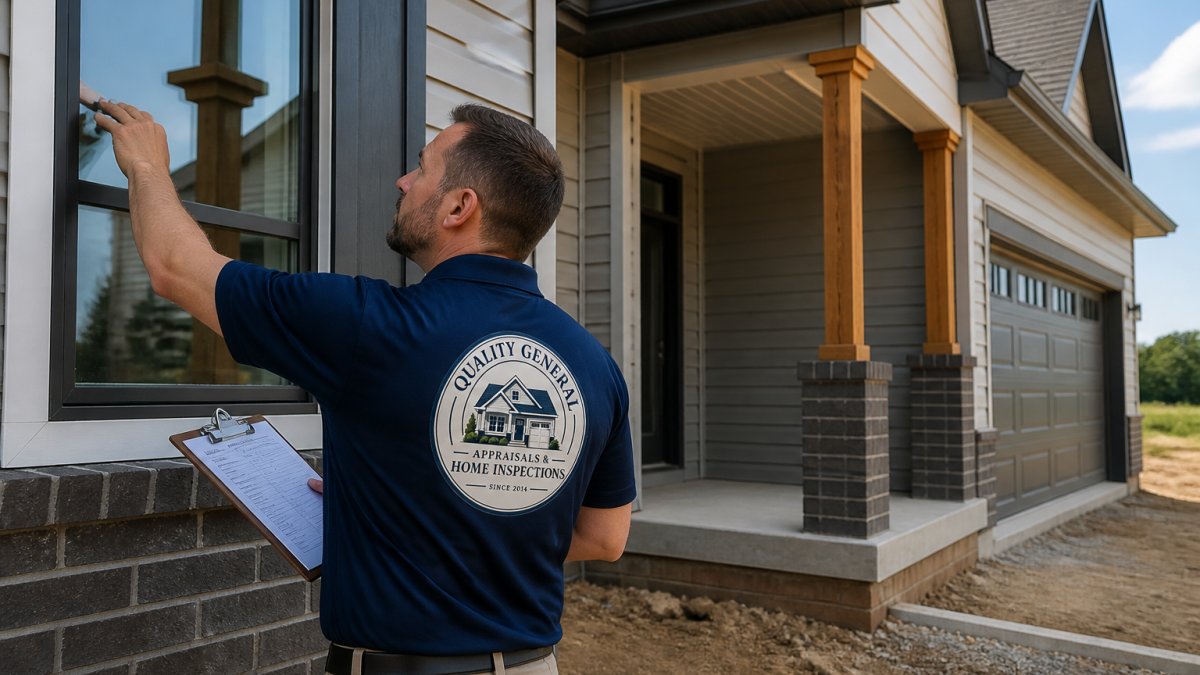
At Quality General Appraisals & Home Inspections, we walk new builds across Springfield, Missouri every week. We find the same issues again and again: missed insulation, loose wiring, and grading that sends water toward the foundation.
Here is the part most buyers miss. A municipal inspector visits a house for a few minutes at each stage. A private inspector spends hours on one home. That gap is where costly defects live.
Below, we break down when to schedule each inspection, what gets checked, and the defects we see most in new build homes.
Municipal Building Inspection vs Private Home Inspection: What's the Difference?
A municipal building inspection is a code compliance check run by your city or county. A private home inspection is a deep, buyer-paid review of the whole house. They are not the same service, and one does not replace the other.
The municipal inspector confirms the home meets local building codes. That is a safety floor, not a quality ceiling. Codes set minimum standards, so a house can pass code and still have problems.
A private inspector works for you, not the builder. We check the roof, attic, foundation, electrical panel, plumbing, and HVAC. We also test for radon, moisture, and sewer line issues.
Key differences:
- Who pays: Taxpayers fund the city inspector. You pay the private inspector.
- Who it protects: Code checks protect public safety. A private inspection protects your purchase.
- How long it takes: City visits are short. Private inspections run two to three hours or more.
- What you get: You may never see the city report. A private report comes to you with photos.
When to Schedule a Home Inspection for New Construction
Schedule two inspections on a new build: one before drywall goes up and one before you close. The pre-drywall stage catches problems while walls are still open. The final walkthrough catches cosmetic and system issues before you sign.
Timing matters more on a new build than on an existing home. Once drywall covers the framing, hidden problems get expensive to fix. If you wait until closing, some issues may already be sealed behind paint.
Pre-Drywall Inspection
Book the pre-drywall inspection after framing, wiring, and plumbing are in but before insulation and drywall. This is your one clear look inside the walls.
We check the framing, stud spacing, and load paths. We look at electrical runs, outlet placement, and panel work. We check plumbing lines, drain slopes, and vent connections. We also inspect the roof structure and window flashing.
A common mistake is skipping this stage because the house "looks fine." Open walls are the only time you can see these systems clearly.
Final Walkthrough Inspection
The final walkthrough happens once the home is finished and before closing. It covers everything visible and testable.
We run the furnace and air conditioning. We test every outlet, switch, and fixture. We check the roof, siding, grading, and drainage. We look at cabinets, counters, doors, and windows for damage or poor fit.
This is also the time to confirm the builder fixed anything from the pre-drywall report.
New Construction Home Inspection Checklist: What Inspectors Look For
A new construction home inspection checklist covers the structure, the systems, and the finish work. It follows the same path a private inspector walks on any home, with extra focus on items builders often rush.
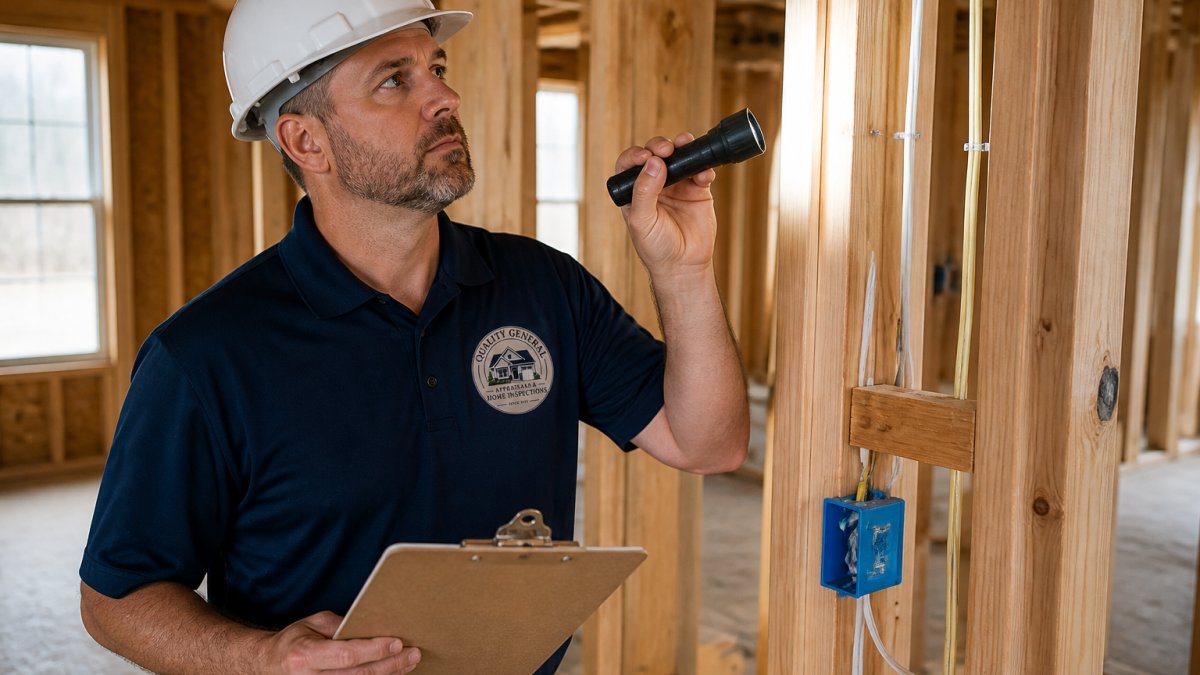
Here is what we check on a typical new build:
- Foundation and grading: Cracks, settling, and water flow away from the house
- Framing and structure: Stud spacing, beams, and load points
- Roof: Shingles, flashing, vents, and attic ventilation
- Electrical: Panel, wiring, grounding, outlets, and GFCI protection
- Plumbing: Supply lines, drains, water pressure, and leaks
- HVAC: Heating, cooling, ductwork, and airflow
- Insulation and ventilation: Attic and wall coverage, plus bath and kitchen fans
- Windows and doors: Seals, operation, and exterior flashing
- Exterior: Siding, trim, walkways, and drainage
We also offer add-on testing that matters on new builds. Radon testing checks for a gas that can build up in any home, old or new (the EPA). A sewer line scope looks for blockages or damage in the underground line. Termite and WDI inspections check for wood-destroying insects.
How long does a new construction inspection take?
A new construction inspection usually takes two to three hours, depending on the size of the home. Larger homes, or homes with add-on testing like radon or sewer scopes, take longer. You get a same-day report with photos from our team.
Common Defects in New Build Homes
Common defects in new build homes come from speed, not bad intent. Builders push to finish, and small items slip through. Most are fixable, but only if someone catches them.
The issues we see most often in Springfield-area new builds:
- Poor grading and drainage: Soil slopes toward the foundation instead of away from it
- Missing or thin insulation: Gaps in the attic or walls that raise energy bills
- Loose or miswired outlets: Reversed polarity, missing GFCI, or dead outlets
- Roof flashing errors: Gaps around vents and chimneys that let water in
- HVAC problems: Undersized units, blocked vents, or poor airflow
- Cracked or settling concrete: Driveways, patios, and garage slabs
- Cosmetic damage: Scratched floors, cracked tile, and poorly hung doors
- Plumbing leaks: Loose fittings and slow drains under sinks
Missouri's freeze-thaw cycles make drainage and foundation issues worse over time. Water that pools near a foundation in fall can freeze and push against it in winter.
The Benefits of a New Construction Inspection
The main benefit of a new construction inspection is use. You get a clear list of defects while the builder still has a duty to fix them. After closing, that use drops fast.
Here is what a private inspection gives you:
- A punch list before closing: Written proof of what needs fixing
- Fewer surprises later: Problems get caught while they are cheap to fix
- Health protection: Radon and mold testing keep your family safe
- Loan compliance: FHA, VA, and USDA loans often require certain inspections
- Negotiating power: You can ask the builder to repair items before you sign
- Peace of mind: You know exactly what you are buying
A good report also helps you plan. If the roof has a small issue now, you can budget for it instead of facing a surprise repair.
For buyers using a VA or FHA loan, some inspections are not optional. If you need a HUD foundation certification, our team handles that too. We are veteran-owned, and we know how these loan programs work.
Conclusion: Protect Your Investment With a Professional Inspection
A new home is still a major purchase, and small defects can grow into big repair bills. A private inspection gives you the facts before you sign, not after. In Springfield and across Southwest Missouri, our team delivers same-day reports with clear photos and plain language.
Quality General Appraisals & Home Inspections offers home inspections, radon and mold testing, sewer line scopes, termite and WDI inspections, and HUD foundation certifications. We are veteran-owned and family-operated, with a Certified Master Inspector on staff. Our reports use infrared imaging, crawlspace robots, and sewer cameras to find what the eye alone can miss. Comprehensive evaluations extend beyond the foundation and interior systems to include a roof certification inspection to ensure the structural integrity of your home's most critical barrier against the elements.
Do not close on a new build without a second set of eyes. Schedule your new construction inspection with Quality General Appraisals & Home Inspections and protect your investment from day one.
Frequently Asked Questions
Why would a brand new house need a home inspection?
New homes are built by humans, and mistakes happen. Municipal inspectors check code compliance at specific stages, but they don't examine every system or catch cosmetic defects. A private new construction inspection covers the full house, from foundation to roof, and identifies issues while the builder is still responsible for repairs. In Springfield and Southwest Missouri, soil conditions and seasonal weather can also affect new builds in ways that only a thorough inspection will reveal.
Do municipal building inspections cover everything in a new home?
No. Municipal building inspections focus on minimum code compliance, not overall quality or long-term durability. They may not check grading, drainage, or cosmetic finishes, and they don't inspect for radon, mold, or sewer line problems. A private inspection fills those gaps. Understanding the difference between municipal building inspection vs private home inspection helps you decide what level of oversight your new home actually needs.
What are the most common defects found in new construction homes?
Common defects in new build homes include improper grading that leads to water intrusion, missing or inadequate flashing, poorly sealed windows and doors, HVAC imbalances, and electrical issues like reversed polarity or missing GFCI outlets. Foundation cracks and sewer line blockages from construction debris are also frequent. A pre-drywall inspection catches many of these before they're covered up, and a final inspection confirms they've been corrected.
When should I schedule a home inspection for a new build?
Schedule two inspections: one before drywall goes up (pre-drywall) and one after the home is finished but before closing (final walkthrough). The pre-drywall inspection lets the inspector see framing, wiring, and plumbing that will be hidden later. The final inspection confirms finishes, systems, and appliances work correctly. In Springfield, Missouri, scheduling early is important because inspector availability can be tight during peak building season.