 How-to
7 Steps to Test for Radon Gas in a Basement
Last Updated: November 15, 2026
Quick Summary
To test for radon gas in a basement, place a short-term test kit in the lowest livable level under closed-house conditions, keeping it 20 inches to 6 feet above the floor and at least 3 feet from sump pits, drains, and exterior openings. Leave the device undisturbed for the full test window, then seal and mail it to the lab. The EPA action level is 4 pCi/L, so retest or consider mitigation at or above that reading.
- Radon gas is colorless and odorless, so testing is the only way to know your basement's level.
- Keep doors and windows closed on all levels for the full test window.
- Set the device 20 inches to 6 feet above the floor and 12 inches from exterior walls.
- Stay at least 3 feet from sump pits, floor drains, foundation cracks, and exposed soil.
- Retest every two years when results are well below 4 pCi/L.
Table of Contents
- Why Testing for Radon Gas in a Basement Matters
- Step 1: Choose a Radon Test Kit
- Step 2: Prepare the Basement for Testing
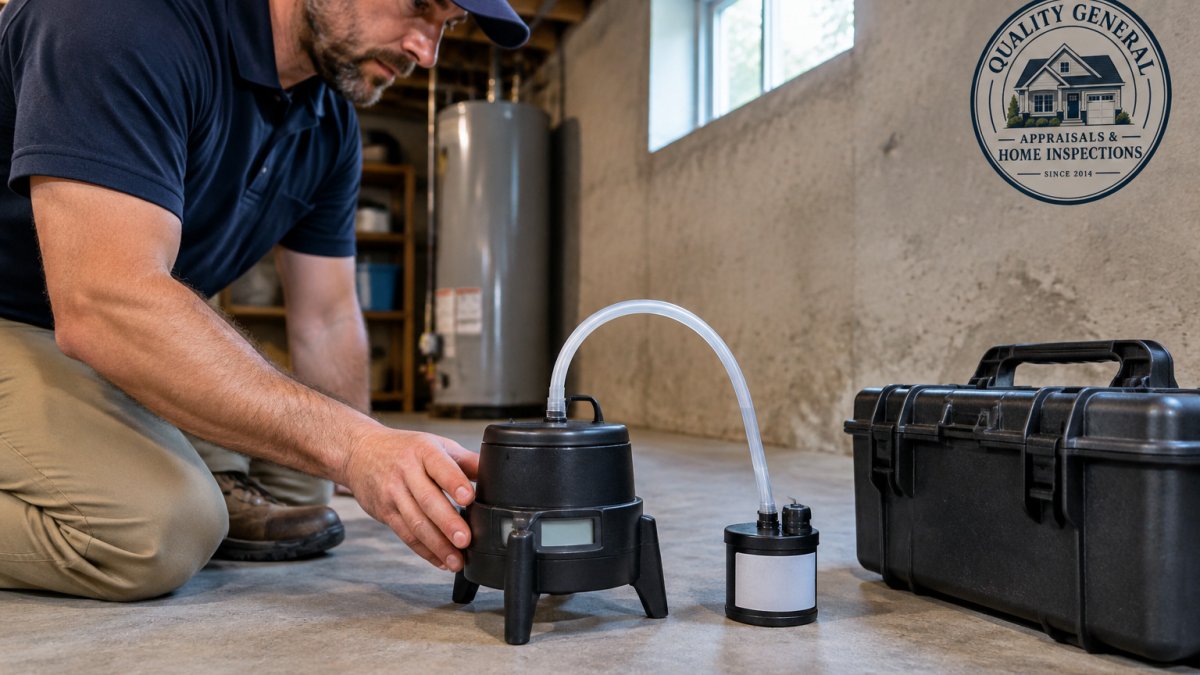
- Step 3: Place the Test in the Right Spot
- Step 4: How to Test for Radon Gas in a Basement at Home
- Step 5: Find the Best Radon Test Kit for Your Needs
- Is a Radon Test Required When Buying a Home?
- Schedule Your Basement Radon Test in Springfield
- Frequently Asked Questions
Why Testing for Radon Gas in a Basement Matters
Radon gas is a colorless, odorless, radioactive soil gas that can build up inside a home, and the basement is usually where it collects first.
This guide walks through how to test for radon gas in a basement, step by step, for homeowners in Springfield, Missouri and across Southwest Missouri. Radon forms as uranium breaks down in soil and rock, then seeps upward. It enters through foundation cracks, sump pits, floor drains, and gaps around pipes.
The stakes are health, not property value. Radon exposure is the second leading cause of lung cancer in the United States after smoking, according to the U.S. Environmental Protection Agency's radon guidance. The EPA sets an action level of 4 picocuries per liter (pCi/L) for indoor air (the EPA).
How Radon Gas Enters a Basement
A basement sits in direct contact with soil, which makes it the most likely entry point. Radon moves from higher-pressure soil into the lower-pressure air of a home. Common entry points include:
- Cracks in the foundation floor and walls
- Sump pits and floor drains
- Gaps around pipes and utility lines
- Porous block walls and exposed soil in crawl spaces
Because the basement is the lowest livable level, it is where radon concentration is usually highest. Testing that level gives you the clearest picture of your exposure.
Step 1: Choose a Radon Test Kit
Start with a short-term test kit unless you have a specific reason to do otherwise. Short-term tests run for a set window and give you a fast first reading; long-term tests run for months and capture seasonal swings. For most homeowners, a short-term test answers the basic question: is my basement in a range that needs attention?
Kits come in a few common types:
- Charcoal or passive test kits: mail-in laboratory analysis, simple to use
- Continuous radon monitors: electronic devices that log readings over time
- Professional measurement: a qualified radon professional places and retrieves devices
If you want a sense of what testing involves before you commit, our guide to radon testing costs in Missouri explains how the process works.
Step 2: Prepare the Basement for Testing
Test accuracy depends on closed-house conditions. For the test window, keep doors and windows on all levels closed as much as practical. That means:
- Close exterior doors and windows, allowing for normal entry and exit
- Keep the basement door closed to the rest of the house
- Run your normal heating or cooling, but avoid fans that pull in outside air
- Do not run a whole-house fan or open the fireplace damper
- Leave the test device undisturbed once placed
A common mistake is testing during a windy week with windows open. That flushes air through the house and can produce a reading that does not reflect normal living conditions. The same applies to testing right after a major weather change.
Step 3: Place the Test in the Right Spot
Placement is where most do-it-yourself radon tests go wrong.
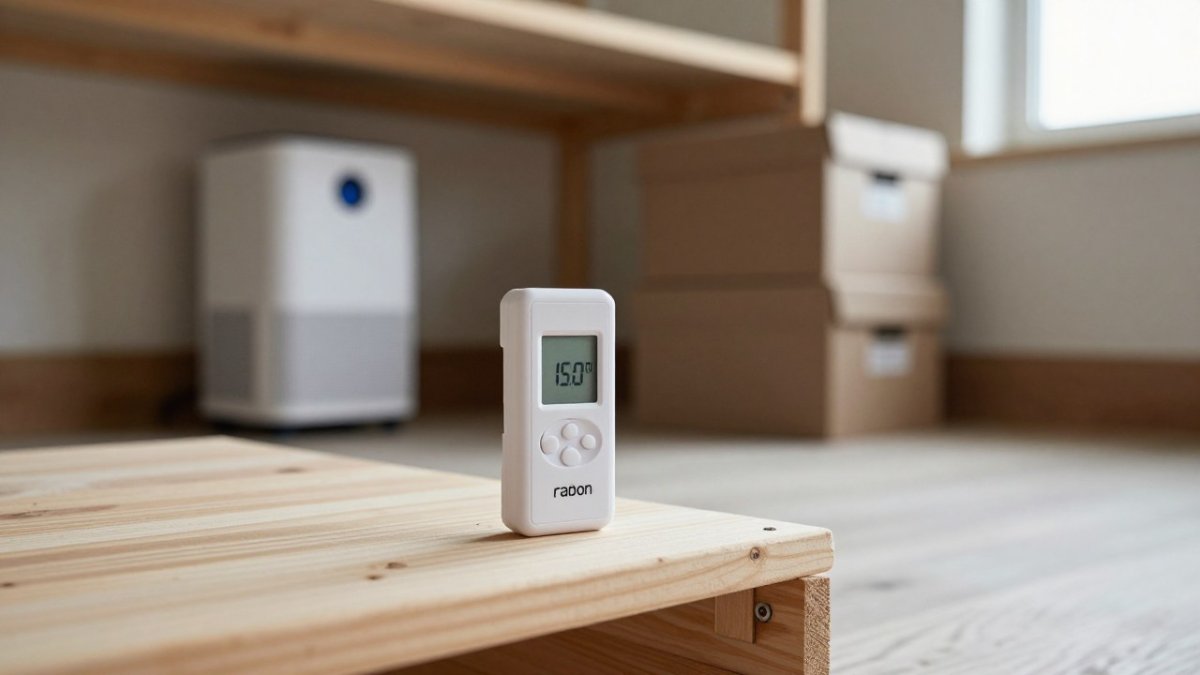
Use this basement-specific placement checklist for a Springfield, Missouri home:
- Height: Set the device 20 inches to 6 feet above the floor. A shelf or table at roughly 2 to 3 feet works well and is easy to leave undisturbed.
- Distance from exterior walls: Keep it at least 12 inches from exterior walls and at least 4 inches from interior walls.
- Distance from openings: Stay at least 3 feet from windows, exterior doors, and vents that move outside air.
- Distance from soil and water: Keep the device at least 3 feet from sump pits, floor drains, foundation cracks, and exposed soil.
- Distance from equipment: Stay at least 3 feet from furnaces, water heaters, dehumidifiers, and laundry equipment that cycle air or water.
- Airflow: Place it in an open area with normal circulation, not inside a closet, cabinet, or behind stored boxes.
- Stability: Put it where it will not be bumped, covered, or moved for the full test window.
Occupied versus unfinished space. In a finished basement, place the device in a room people actually use, such as a bedroom, family room, or home office. That reading reflects real exposure.
Lowest livable level first. If your basement is not used daily, still test it, because it is usually the highest-radon level and the clearest signal of whether soil gas is entering.
Record the details. Write the start date, time, and exact location on the kit label, and take a photo of the setup with your phone.
Watch out: A device placed within a few feet of a sump pit or floor drain can pick up soil gas moving through that opening and read higher than the room as a whole, so keep the required distance even if the pit is the most convenient flat surface. Maintaining this spatial awareness ensures that your radon results remain representative of the actual living environment, a principle that Wilson Carpet & Air Duct Cleaning, LLC emphasizes when evaluating the broader spectrum of indoor air quality at home.
If you would rather have placement handled by a trained professional, our home inspection services include radon testing and a photo-based report.
Step 4: How to Test for Radon Gas in a Basement at Home
Testing at home comes down to following the kit instructions exactly. Short-term passive kits usually run for a few days, then get sealed and mailed to a lab.
Here is the process in order:
- Read the kit instructions fully before opening the device
- Set up closed-house conditions for the full test window
- Place the device using the placement rules above
- Record the start date, time, and location
- Leave the device untouched for the required period
- Seal the device, complete the label, and mail it promptly if required
- Review the lab report when it arrives
What to do with a borderline or inconsistent result. This is where most guides stop, and it is where Springfield-area homeowners most often get stuck. Use this decision path:
- Result well below 4 pCi/L: No immediate action. Retest every two years, or sooner if you renovate the basement, change heating and cooling equipment, or notice new foundation cracks.
- Result between 2 and 4 pCi/L: Treat it as a signal to confirm. Run a second short-term test in the same location under closed-house conditions, ideally in a different season. If the repeat is also in that range, consider a long-term test or a professional measurement before deciding on mitigation.
- Result at or above 4 pCi/L: The EPA action level calls for follow-up. Run a second short-term test, or move directly to a long-term test or a professional measurement, before committing to a mitigation system.
- Two results that disagree sharply: Placement, weather, or closed-house compliance is usually the cause. Review your setup photo and notes, then have a qualified professional place devices in the same locations to settle the question.
- Result that seems too low for a basement with known cracks or a sump pit: Do not assume the test was wrong, but do confirm it with a second device or a professional measurement before ruling out mitigation.
A follow-up test is worth doing whenever your first result is borderline or inconsistent with a prior reading.
Season and weather matter. Closed-house conditions, heating and cooling use, storms, and seasonal swings can all shift a short-term reading.
Keep your records. Save the lab report, the setup photo, and the dates. A clear record makes a repeat test or a mitigation conversation much easier.
If you want the follow-up handled for you, Quality General Appraisals & Home Inspections provides professional radon testing in Springfield, Missouri and surrounding communities, with documented placement and a photo-based report you can act on.
Step 5: Find the Best Radon Test Kit for Your Needs
The best radon test kit is the one that matches your timeline, budget, and how much detail you want. Passive mail-in kits suit most homeowners who want a quick first answer. Continuous monitors cost more but show how levels change day to day. Professional testing adds a trained eye for placement and interpretation.
| Kit Type | Best For | Effort | Speed |
|---|---|---|---|
| Passive charcoal kit | Quick first reading | Low | Days to weeks |
| Continuous monitor | Tracking daily swings | Low | Ongoing |
| Professional test | Buying, selling, or follow-up | None | Scheduled |
If you would rather have a professional handle placement and reporting, our home inspection services include radon testing alongside other specialized checks.
Is a Radon Test Required When Buying a Home?
A radon test is not required by federal law when buying a home, but many buyers request one during the inspection period and some lenders and relocation programs ask for it. In practice, testing before closing is one of the smartest steps a buyer can take. A result that comes back elevated gives you room to negotiate mitigation or walk away.
New construction deserves the same attention. A newer home can still sit on soil that produces radon, and a tight, well-sealed house can trap gas more effectively than an older one. If you are weighing whether a new build needs testing, our article on whether radon testing is necessary for new homes covers the reasoning.
For sellers, a pre-listing radon test removes a common source of last-minute renegotiation. It also pairs well with a full pre-listing inspection.
Schedule Your Basement Radon Test in Springfield
If you would rather not manage a kit yourself, we can handle the whole process for you. Visit Home Inspect Springfield to schedule your professional radon test.
We are veteran-owned and family-operated, and our team brings more than 20 years of appraisal experience and more than 10 years of home inspection experience. Alongside radon testing, we offer home inspections, mold testing, sewer line scopes, termite and WDI inspections, and HUD foundation certifications.
Testing your basement is a small step with a clear payoff: you either confirm your home is in a safe range or you learn what to do next. Either way, you stop guessing.
Radon is one of the few home health questions you can answer with a measurement instead of a guess. If your basement has never been tested, or your last test was years ago, schedule a professional radon test with Quality General Appraisals & Home Inspections.
Frequently Asked Questions
How likely is it that my basement has radon?
Radon is common in Missouri because the state sits on soil that releases radon gas. Any basement can collect it, even in newer homes built in 2015. The only way to know is to test. A short-term radon test kit gives you a clear reading within days. If you live in Springfield or nearby, schedule a professional test to confirm what is in your basement.
Do air purifiers clear out radon?
No. Air purifiers filter dust, pollen, and some chemicals, but they do not remove radon gas. Radon comes from soil gas that seeps through foundation cracks and sump openings. A mitigation system with a vent pipe and fan is the proven way to reduce radon levels. Do not rely on an air purifier as a substitute for testing or mitigation.
Can opening basement windows affect a radon test?
Yes. Opening windows or doors during a test lets outside air dilute the radon reading, so your result may look lower than it really is. For a short-term test, keep the basement closed for at least 12 hours before and during the test. Follow the kit instructions closely, and avoid fans or vents that pull in outdoor air.
Should you use a DIY radon test kit or hire a professional?
A DIY radon test kit works for a first look and costs less. If you are buying a home, a professional test can be a valuable option. Quality General offers radon testing in Springfield.