 how-to
How Much Does Radon Testing in Missouri Cost?
Last Updated: November 1, 2026
Quick Summary
Radon testing cost in Missouri depends on the test method, your home's size and foundation, and whether you hire a professional. Short-term tests use passive detectors, long-term tests run more than 90 days, and continuous monitors log readings hour by hour. Request a written quote from each provider to compare fairly.
- Test type is the biggest cost driver, followed by home size, foundation, and access.
- A short-term radon test typically takes a few days, depending on the device and protocol.
- Long-term tests run more than 90 days and better estimate year-round average exposure.
- The EPA sets the national radon action level at 4 picocuries per liter of air.
- Bundling radon testing with a home inspection can reduce scheduling overhead versus two visits.
Table of Contents
- What Drives Radon Testing Cost in Missouri
- Professional Radon Testing vs. DIY: What the Price Difference Buys
- How Long Does Radon Testing Take?
- Radon Testing During a Home Inspection: How Bundling Affects Cost
- The Missouri Radon Action Level and What Happens If You Exceed It
- How to Find a Radon Testing Provider in Springfield
- Schedule Your Radon Test with Quality General
- Frequently Asked Questions
What Drives Radon Testing Cost in Missouri
Radon testing cost in Missouri depends on several factors, including the test method, your home's size and foundation, and whether you hire a professional. Pricing depends on the property and scope, so request a written quote from each provider. Radon is a colorless, radioactive gas that seeps up from soil and rock. It builds up indoors, and Missouri sits in a region where elevated levels show up often. At Quality General Appraisals & Home Inspections, we run radon tests for buyers and homeowners across Springfield and Southwest Missouri, and the questions we hear most are about price and timing.
Here is the honest answer up front: no single number fits every home. Two houses on the same street can need different tests. What you can control is knowing what moves the price, so you can compare quotes fairly instead of guessing.
Test Type and Equipment
Test type is the biggest cost driver. A short-term test uses passive charcoal or electret detectors. They sit in the home for a set period and then go to a lab. A long-term test runs for months and gives a better picture of your year-round average exposure.
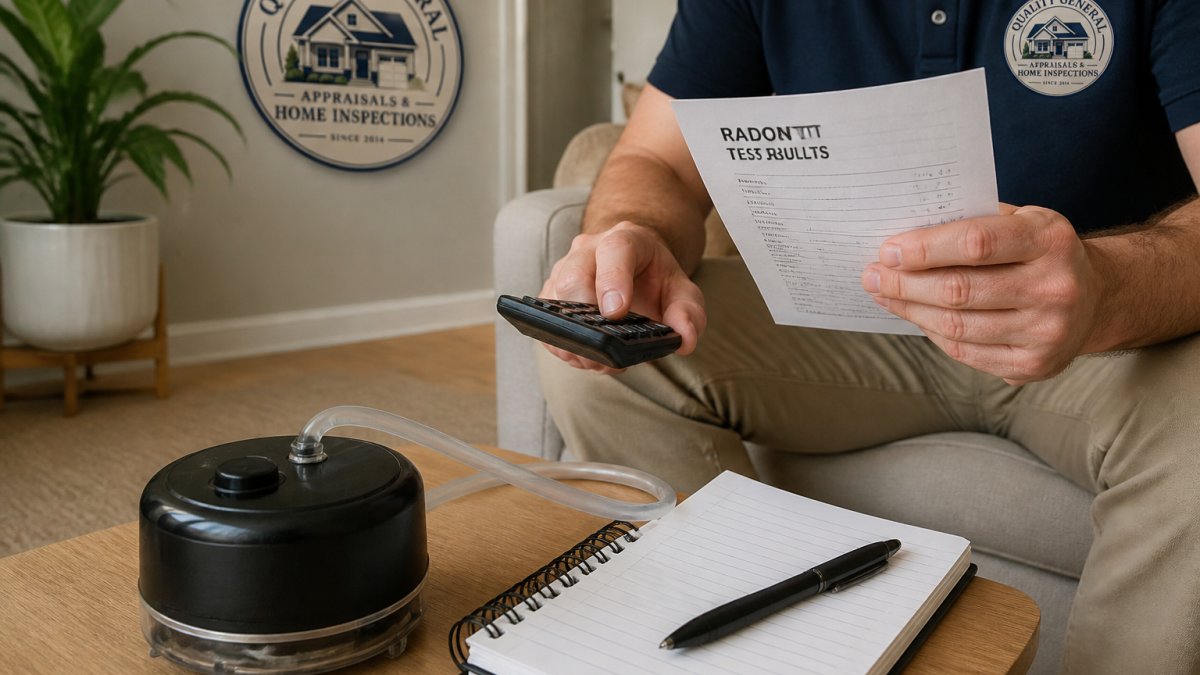
Continuous radon monitors are the third option. These are electronic units that log readings hour by hour and produce a report at the end. The equipment, the lab fees, and the time on site all feed into what you pay.
Home Size, Foundation, and Access
Bigger homes and complex foundations take more work. A finished basement, a crawlspace, or a home with multiple low levels may need more than one detector. Each additional device adds to the bill.
Access matters too. If a technician can walk in and place a monitor, the visit is quick. If the only low level is a cluttered crawlspace or a locked utility room, expect more setup time. Ask any provider how they handle multi-level homes before you compare quotes.
Professional Radon Testing vs. DIY: What the Price Difference Buys
DIY radon kits cost less up front, and that is their main appeal. You buy a kit, follow the instructions, and mail the detector to a lab. The trade-off is everything that can go wrong between placing the kit and reading the result.
Professional testing generally provides a few specific things:
- Placement. Detectors are typically placed in the lowest livable level, away from drafts and exterior walls.
- Closed-house conditions. Windows and doors are kept shut for the required period before and during the test.
A common mistake is running a DIY kit during a windy week with the windows open. The reading comes back low, and the homeowner assumes the house is fine. In practice, that test told you almost nothing.
The real difference between the two comes down to reliability. To see what our radon testing service includes, review the details before you decide. If you are testing to satisfy a real estate contract or a lender, hire a professional. If you are curious about your current home and willing to follow the instructions exactly, a DIY kit can work as a first check.
How Long Does Radon Testing Take?
A short-term radon test typically takes a few days, depending on the device and the provider's protocol.
Long-term tests run for more than 90 days. They give a better estimate of your average exposure across seasons, since radon levels shift with weather and soil moisture.
For a home sale, a short-term test is a common route. The home stays closed while the device runs, and the device is then retrieved for analysis.
Timing matters more than people expect. Radon levels rise and fall with the seasons and with the weather. A test run during a calm, mild week can read lower than the same home in winter. That is why a professional will tell you exactly when to start and what to avoid during the test window.
Here is how the main test types compare on duration and what they tell you.
| Test type | Duration | What it provides |
|---|---|---|
| Short-term test | A few days | A snapshot reading from passive detectors |
| Long-term test | More than 90 days | Better estimate of year-round average exposure |
| Continuous radon monitor | Runs during the test period | Hour-by-hour readings and a report at the end |
Radon Testing During a Home Inspection: How Bundling Affects Cost
Bundling radon testing with a home inspection can reduce scheduling overhead compared with booking two separate visits.
The catch is timing. Radon testing needs a closed house, while a home inspection involves opening doors, moving through rooms, and running systems. Ask how any provider handles that overlap before you book. Coordinating these logistics alongside an electrical safety inspection ensures that your property assessment remains efficient and avoids unnecessary disruptions to the building environment.
Buyers often ask whether a newer home needs radon testing at all. New construction does not exempt a house from radon. The gas comes from the soil, not the age of the framing. If you are weighing that question, our article on whether new homes need radon testing walks through it. Pairing radon with a full home inspection is the simplest way to cover both in one visit.
The Missouri Radon Action Level and What Happens If You Exceed It
The U.S. Environmental Protection Agency sets the national radon action level at 4 picocuries per liter (pCi/L) of air (the EPA). Missouri does not set a separate number; providers and lenders follow the EPA figure. The EPA's radon guidance explains the level and what it means.
If your result comes back at or above 4 pCi/L, the next step is mitigation, not panic. A radon mitigation system uses a vent pipe and fan to pull soil gas from beneath the foundation and route it outdoors. Mitigation is a known remedy and can be part of a home sale negotiation.
A result below 4 pCi/L does not mean zero risk (the EPA). The EPA notes that no level is completely safe, and many homeowners retest every couple of years or after major renovations. Retesting can help you keep track of your home's radon levels over time.
How to Find a Radon Testing Provider in Springfield
Start by asking three questions: Is the tester certified? What equipment do they use? How fast do you get the report? A provider who answers all three clearly is worth a second look.
Look for testers who use continuous monitors or documented lab devices and who explain the closed-house rules before the visit. Ask whether the report includes photos and placement details. Those details matter if the result ends up in a contract negotiation.
For current pricing, request a written quote from Quality General Appraisals & Home Inspections, and compare it with quotes from other providers in the Springfield area. You can also review our home inspection prices to help budget for the service.
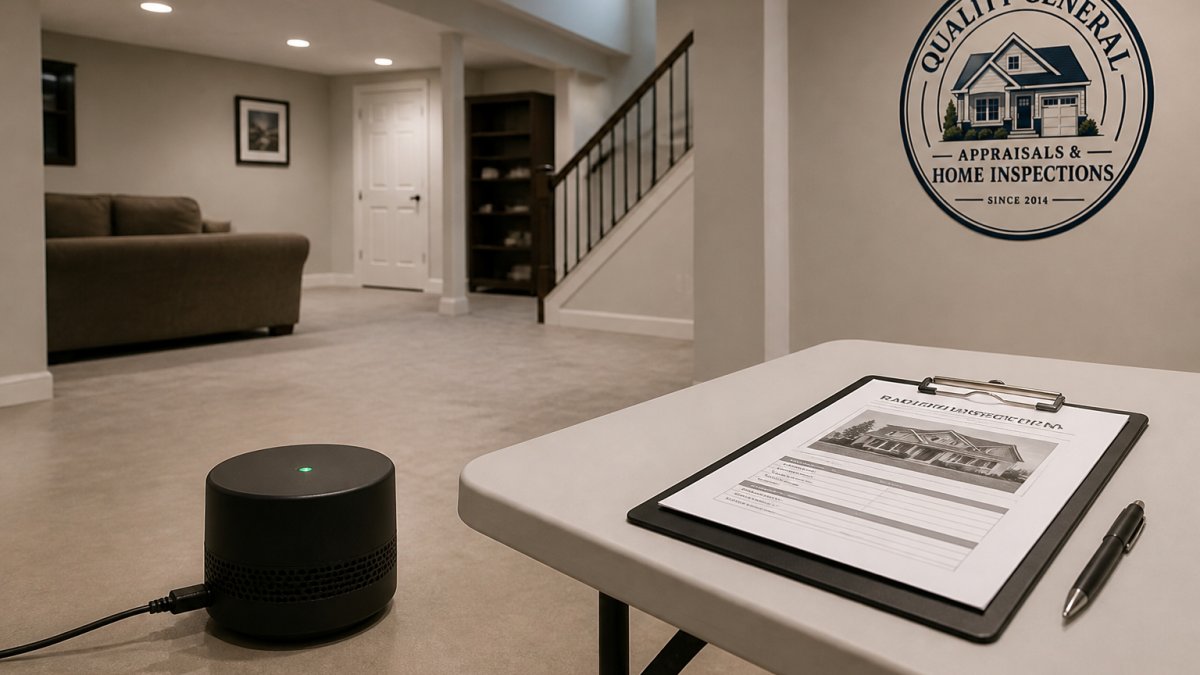
A short checklist helps you compare providers side by side:
- Tester is certified and can show credentials
- Equipment type is explained up front
- Closed-house conditions are spelled out in writing
- Report includes photos and placement records
- Turnaround time is confirmed before booking
Schedule Your Radon Test with Quality General
Testing is the only way to know what is in your air. The cost of radon testing in Missouri varies, but the value is the same: a clear answer you can act on. Guessing is the expensive option.
Quality General Appraisals & Home Inspections is veteran-owned and family-operated, with a Certified Master Inspector on staff. We provide same-day reporting with quality photographs and use professional inspection equipment. If you are buying or selling in Springfield or Southwest Missouri, contact us to discuss whether radon testing can be combined with a home inspection.
Get started with Quality General and schedule your radon test today. Visit our contact page to reach the team and book a time. Reach out to Quality General to find a time that fits your closing schedule.
Frequently Asked Questions
How much does radon testing cost in Missouri?
Radon testing cost in Missouri varies by test type, home size, and provider. Test type, home size, and provider all affect the total. Because pricing depends on the property and scope, ask each provider for a written quote rather than relying on a single advertised number.
Is a DIY radon test as reliable as a professional test?
A DIY kit can give you a rough reading, but professional radon testing vs. DIY differs in placement, documentation, and interpretation. A qualified tester can help with closed-house conditions and device placement. If a DIY result comes back elevated, you will likely need a professional test to confirm it before deciding on mitigation.
How long does radon testing take during a home purchase?
A short-term test typically runs a few days, and the duration depends on the device and the provider's schedule. Ask your inspector whether the test fits your inspection contingency period before you schedule.
What radon level requires mitigation in Missouri?
The U.S. EPA guidance sets an action level of 4 picocuries per liter (pCi/L), and mitigation is generally recommended at or above that level. A professional test report will state your result and whether a follow-up or mitigation estimate is the next step.
Radon is one of those risks you cannot see, smell, or taste, which is exactly why testing belongs on your closing checklist. Quality General Appraisals & Home Inspections offers professional radon testing, same-day photo-based reports, and a Certified Master Inspector on staff to help you read the results. Get started with Quality General and know exactly what you are buying before you sign.