 how-to
7 Signs of Termite Damage in Homes to Check First
Quick Summary
Early signs of termite damage include discarded wings near windows, thin mud tubes along foundation walls, hollow-sounding wood, tiny sawdust-like pellets, and paint that bubbles over wood for no clear reason. Termites hollow wood from the inside out, so damage often goes unseen until it is serious. If you spot several of these signs, schedule a professional inspection.
- Termites leave the outer layer of wood intact and hollow out the rest.
- Check crawlspaces, behind cabinets, under flooring, and around plumbing.
- Tap wood with a screwdriver handle to listen for hollow sounds.
- Several warning signs at once call for a professional inspection.
- Fix moisture problems, since damp wood attracts termites.
Table of Contents
- Why Termite Damage Is Easy to Miss
- Early Signs of Termites in a House
- How to Inspect Your Home for Termite Damage
- Termite Damage vs Water Damage: How to Tell Them Apart
- Termite Inspection for Home Buyers in Springfield
- What to Do After Finding Termite Damage
- Schedule Your Termite Inspection in Springfield
- Frequently Asked Questions
Why Termite Damage Is Easy to Miss
Termite damage hides well. By the time it shows on the surface, the wood behind the walls may have been eaten for years. Many homeowners only notice a problem when a floor sags or a door starts sticking.
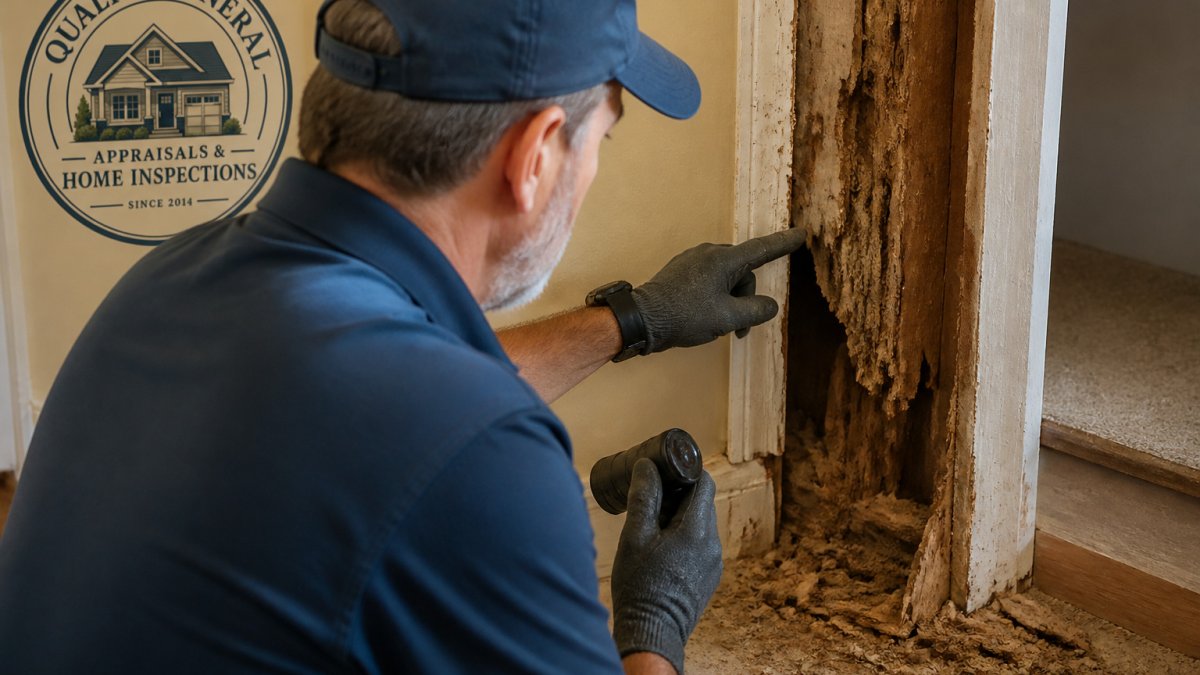
Termites feed from the inside out. They leave the outer layer of wood intact and hollow out the rest, so a beam can look solid while it has lost much of its strength. This is why a quick glance rarely catches the problem.
Most damage sits in places people do not look often, such as crawlspaces, behind cabinets, under flooring, and around plumbing. A visual check of these spots is the first step toward finding trouble early.
Early Signs of Termites in a House
The earliest signs are often small and easy to dismiss. Learning what to look for can help you act before the damage spreads.
Watch for these early warning signs:
- Discarded wings: Swarmers shed their wings near windows, doors, and light sources.
- Mud tubes: Thin, pencil-width tunnels along foundation walls, piers, or pipes.
- Tapping sounds: Hollow noises when you tap on wood with a screwdriver handle.
- Small pellets: Tiny droppings that look like sawdust or coffee grounds near wood.
- Blistering paint: Paint that bubbles or peels over wood for no clear reason.
If you see several of these at once, schedule a professional inspection. One sign alone does not always mean termites, but it is worth checking.
Here is a quick reference for the early warning signs to watch for:
| Sign | What it looks like | What to do |
|---|---|---|
| Discarded wings | Shed near windows, doors, and light sources | Schedule a professional inspection |
| Mud tubes | Thin, pencil-width tunnels along foundation walls, piers, or pipes | Check foundation walls and piers |
| Tapping sounds | Hollow noises when tapping wood with a screwdriver handle | Tap wood to test for hollow areas |
| Small pellets | Tiny droppings resembling sawdust or coffee grounds near wood | Look near wood for droppings |
| Blistering paint | Paint that bubbles or peels over wood for no clear reason | Inspect painted wood for damage |
How to Inspect Your Home for Termite Damage
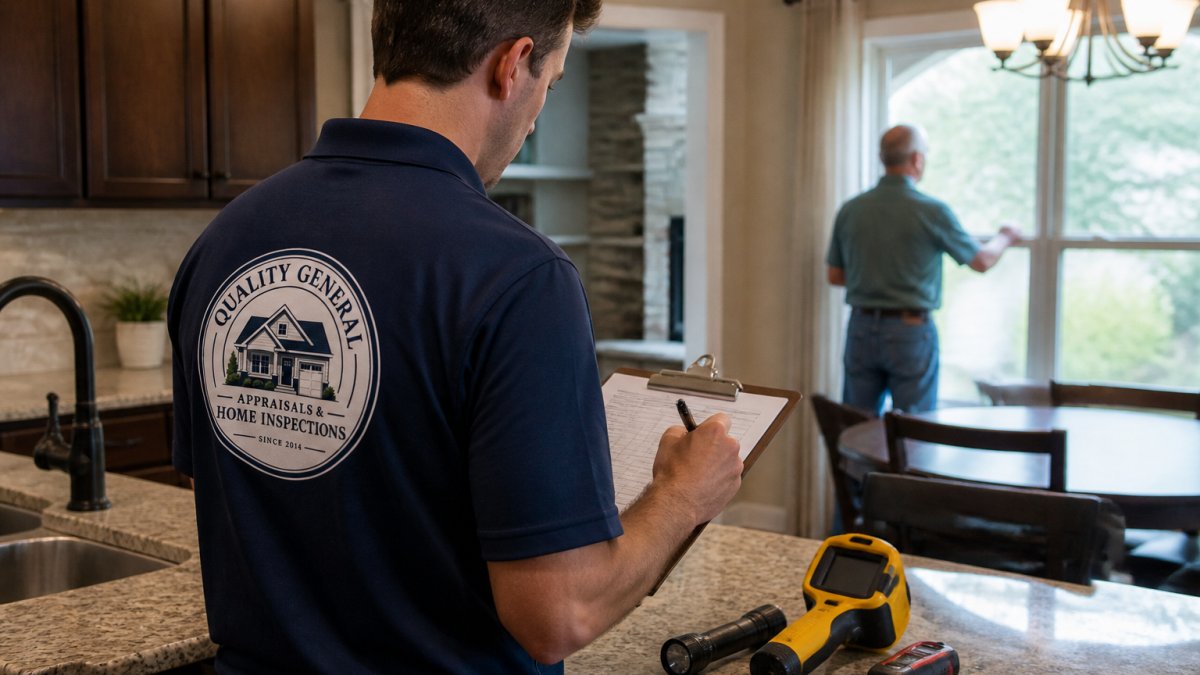
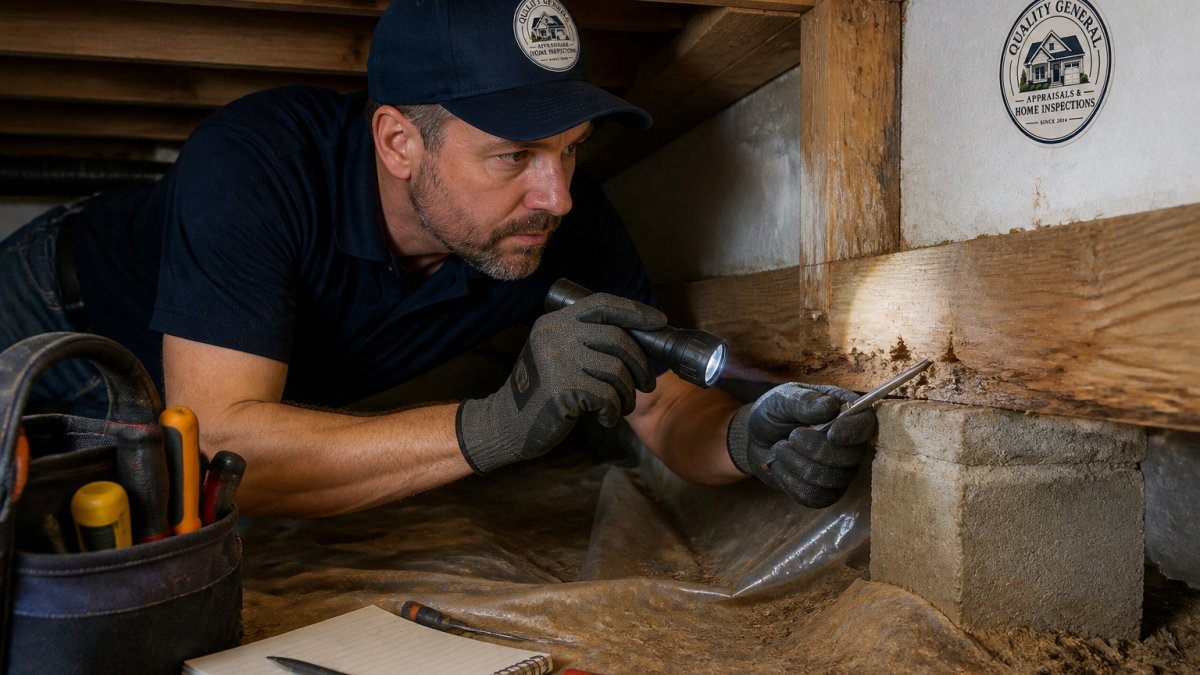
A simple visual check needs only a few basic tools: a flashlight, a screwdriver, a moisture meter if you have one, and a pair of work gloves.
Checking Wood Inside and Outside
Start outside and work your way in. Look at the wood around the home first.
- Check siding, trim, fascia boards, and deck posts for cracks or soft spots.
- Probe wood near the ground with a screwdriver. Firm wood resists, while damaged wood gives way easily.
- Inspect wood stored against the foundation, since it can draw termites to the structure.
Inside the home, focus on the crawlspace or basement. Look at floor joists, sill plates, and support beams. Probe any wood that looks darker or wavy.
Looking at Floors, Walls and Ceilings
Interior signs often show up as changes in the surfaces you walk on and look at every day.
- Look for bowed or uneven floors, especially near exterior walls.
- Check door frames and window sills for gaps or swelling.
- Watch for ceiling stains or drywall that feels soft when pressed.
Note anything unusual and take photos. Photos help a professional inspector understand what you found.
Termite Damage vs Water Damage: How to Tell Them Apart
Termite damage and water damage can look alike, but they leave different clues. Knowing the difference helps you decide what to fix first.
Termite damage usually appears as hollow wood, mud tubes, or tiny holes in wood (Evidence of Termite Scouting). Water damage more often shows as stains, peeling paint, musty smells, or soft drywall near plumbing or roofs.
Sometimes both problems exist together, since damp wood attracts termites. Moisture problems can make termite activity worse, so fixing leaks is part of protecting the home. A professional can use moisture detection tools to find the source and rule out one cause or the other.
Termite Inspection for Home Buyers in Springfield
If you are buying a home in Springfield, a termite inspection should be part of your due diligence. Termites are a concern in many Southwest Missouri homes, and older houses with wood contact at the foundation are especially at risk.
Ask for a wood-destroying insect (WDI) inspection as part of the purchase process. A licensed inspector will examine accessible wood and report any active infestation or damage. Use the report during negotiations, and ask for repair estimates before you close. Comprehensive evaluations should also extend to the attic and eaves, as undetected roof water damage often creates the moist environment that termites find most inviting.
Quality General offers termite and WDI inspections for buyers in the Springfield area.
What to Do After Finding Termite Damage
Finding damage can feel stressful, but a calm, organized response works best.
- Stop the spread. Fix any moisture problems and remove wood-to-soil contact where you can.
- Get a professional evaluation. A licensed pest control company can confirm whether termites are active.
- Ask about structural impact. A contractor or structural engineer can judge whether beams or joists need repair.
- Compare treatment options. Pricing depends on the size of the home, the severity of the damage, and the treatment method, so request written estimates from your provider.
- Keep records. Save inspection reports, photos, and invoices for insurance and future buyers.
Understanding your inspection report helps you know what each finding means and what to prioritize.
Schedule Your Termite Inspection in Springfield
Early detection saves money and protects the structure of your home. If you notice any of the signs covered in this guide, or you simply want peace of mind, Quality General Appraisals & Home Inspections can help. Our team serves Springfield and surrounding Southwest Missouri communities with professional termite and WDI inspections and detailed photo-based reports.
Contact us to schedule your inspection and get a clear picture of your home's condition.
Frequently Asked Questions
What are the first signs of termite damage in a home?
The earliest signs are often subtle. Look for small pinholes or sawdust-like frass near wood, mud tubes along foundation walls or pipes, hollow-sounding boards when tapped, and doors or windows that start sticking for no obvious reason. Swarmers, which are winged termites, sometimes appear near windowsills in spring. Any of these signs justifies a closer look, and a professional inspection can confirm whether termites are active.
Can termite damage look like water damage?
Yes, the two can look alike, especially on stained or soft wood near a bathroom, kitchen, or exterior wall. Water damage usually follows a moisture source and tends to be concentrated where water sits. Termite damage often shows hollowed wood with thin surface layers, mud tubes, or frass. Because the causes differ, the fix differs too, so a professional should identify the source before repairs begin.
Can a home inspection identify termite damage?
A home inspection can identify visible signs of termite damage, such as damaged framing, mud tubes, and hollow wood in accessible areas. A dedicated termite or wood-destroying insect (WDI) inspection goes further with a targeted search of hard-to-see areas. Quality General Appraisals & Home Inspections offers termite/WDI inspections in Springfield and surrounding Southwest Missouri communities, with detailed photo-based reporting.