 how-to
Signs of Mold in Basement Walls: Detection & Prevention
Last Updated: October 22, 2026
Quick Summary
Signs of mold in basement walls include dark spots or patches that are black, green, white, or gray, often appearing fuzzy or slimy to the touch. A musty, earthy odor signals active mold growth even before visible discoloration appears. Common locations include areas near foundation cracks, below windows, wall corners, and anywhere condensation collects.
- Mold can be distinguished from efflorescence by its fuzzy appearance, musty smell, and tendency to smear when wiped with a damp cloth.
- Moisture always precedes mold growth, so watch for wet spots, peeling paint, efflorescence buildup, and standing water as early warning signs.
- Mold behind basement walls is dangerous because it grows hidden from view in cavities and insulation, requiring professional thermal imaging to detect.
- For small mold areas under 10 square feet, scrub with detergent solution and fix the moisture source; larger areas need professional remediation.
- Prevention focuses on controlling moisture through foundation crack sealing, improved drainage, dehumidifiers keeping humidity below 50 percent, and proper ventilation.
Table of Contents
- Signs of Mold in Basement Walls
- Basement Wall Moisture Signs That Lead to Mold
- Mold Behind Basement Walls: What You Need to Know
- How to Test for Mold in Basement
- Basement Mold Prevention: Practical Steps
- What to Do If You Find Mold
- Frequently Asked Questions
Signs of Mold in Basement Walls
Basement mold is one of the most common issues homeowners face in Springfield and the surrounding Southwest Missouri region. The damp, dark environment of a basement creates ideal conditions for mold growth. Spotting signs of mold in basement walls early can save you from costly damage and protect your family's health. Persistent moisture often migrates deep into structural materials, making it essential to investigate subtle signs of water damage that frequently precede the visible emergence of fungal colonies.
Mold doesn't just appear overnight. It grows where moisture meets organic material. Your basement walls, whether concrete, masonry, or wood, provide the perfect surface. At Quality General Appraisals & Home Inspections, we help homeowners identify mold problems before they become serious structural issues.
Visual Indicators
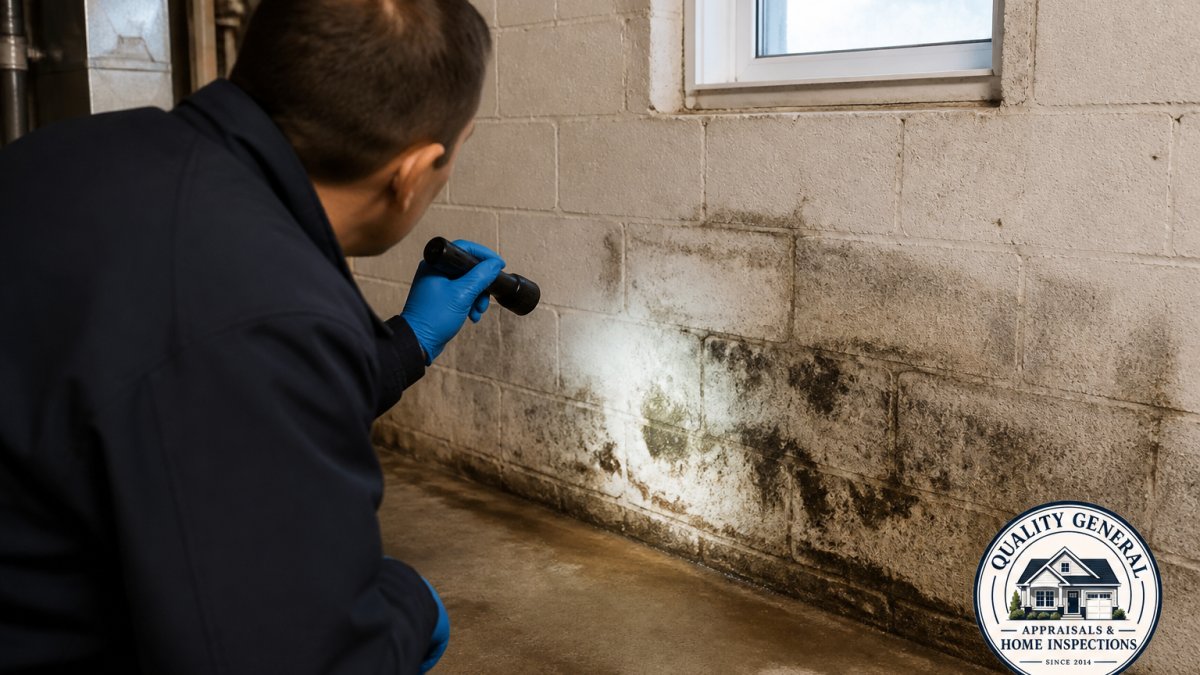
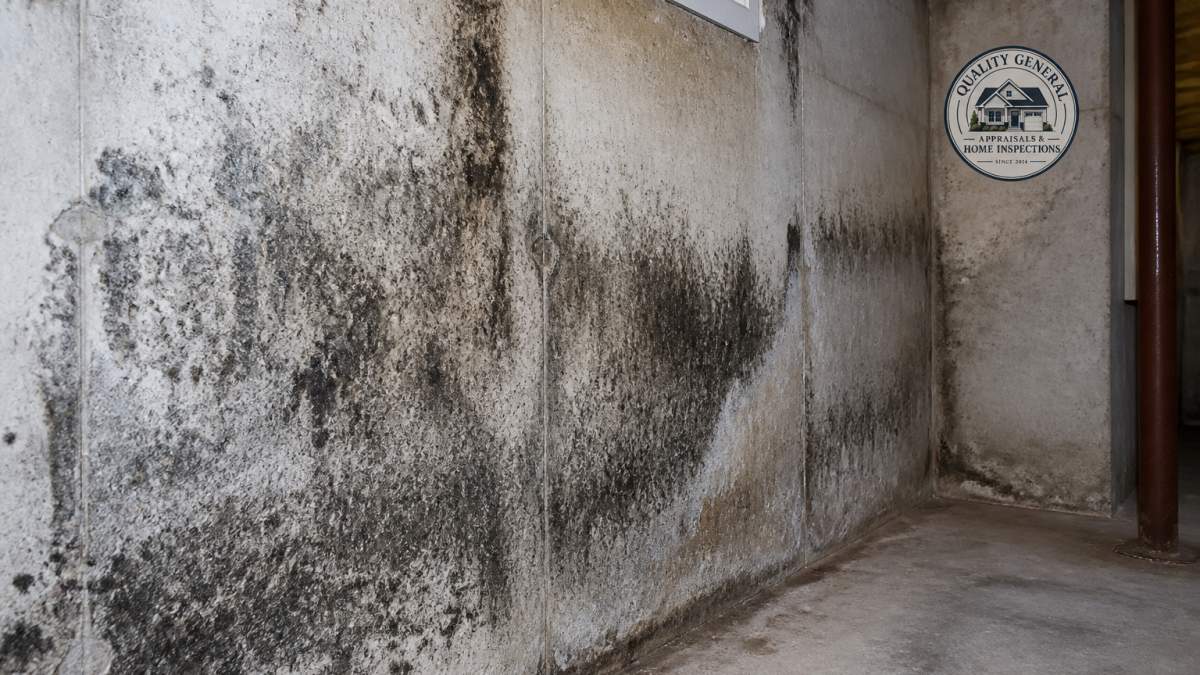
The most obvious sign of mold is discoloration on your basement walls. Look for dark spots, patches, or streaks. Mold can be black, green, white, or gray (the CDC). It often appears fuzzy or slimy to the touch.
Common locations for basement wall mold include:
- Areas near foundation cracks
- Spots below windows or where water enters
- Corners where two walls meet
- Sections touching the soil outside
- Anywhere condensation collects
You may also notice a musty smell. This earthy odor signals active mold growth even if you can't see it yet. Trust your nose, it's often the first warning sign.
Distinguishing Mold from Efflorescence and Dirt
Not every dark spot on a basement wall is mold. Homeowners often confuse mold with efflorescence, a chalky white or gray mineral deposit that forms when water moves through concrete.
Here's how to tell the difference:
| Feature | Mold | Efflorescence | Dirt |
|---|---|---|---|
| Appearance | Fuzzy, slimy, or powdery | Chalky, crystalline | Dusty, smudgy |
| Color | Black, green, white, gray | White or gray | Brown, gray, or tan |
| Smell | Musty, earthy odor | No odor | No odor |
| Touch test | Soft, may spread | Crumbly, brushes off | Brushes off easily |
| Location | On organic surfaces | On mineral surfaces | Random spots |
To test for mold, use a damp cloth to wipe the spot. If it smears and the smell increases, it's likely mold. Efflorescence will crumble and leave a chalky residue. Dirt simply wipes away.
Basement Wall Moisture Signs That Lead to Mold
Moisture always comes before mold. Understanding basement wall moisture signs helps you stop mold before it starts.
Water enters basement walls through several paths:
- Seepage through concrete: Water moves through tiny pores in the foundation
- Cracks in the foundation: Even hairline fractures allow water penetration
- Condensation: Warm, humid air cools on cold basement walls
- Poor drainage outside: Water pools against the foundation
- Groundwater pressure: Soil saturation pushes water inward
Common moisture indicators include:
- Wet spots or stains on walls
- Peeling paint or wallpaper
- Efflorescence buildup
- Rust stains from rebar
- Damp or wet floors
- Standing water in corners
- Visible water marks at a certain height
If you see these signs, mold growth is likely coming. Address the moisture source now, and you'll prevent mold problems later.
Mold Behind Basement Walls: What You Need to Know
Mold behind basement walls is the most dangerous type because you can't see it developing. It grows in the cavity spaces, insulation, and structural materials hidden from view.
Behind-wall mold often starts from:
- Water seeping through the outer foundation
- Condensation on interior walls
- Pipe leaks inside the wall cavity
- Poor ventilation trapping humidity
By the time you notice odors or see surface mold, the problem may already be extensive. Behind-wall mold can damage wood framing, insulation, and drywall. It spreads faster because it's protected from air circulation.
This is why professional inspection matters. At Quality General Appraisals & Home Inspections, we use thermal imaging and moisture detection equipment to identify hidden moisture before mold takes hold. Our team can spot problem areas that visual inspection alone would miss.
How to Test for Mold in Basement
Testing for mold involves two approaches: visual inspection and professional testing. The method you choose depends on what you suspect and how confident you need to be.
DIY Visual Inspection
Start with your own eyes and nose. This costs nothing and catches obvious problems.
Steps for a DIY inspection:
- Walk the entire basement perimeter slowly
- Look at all walls, especially corners and lower sections
- Check around windows, doors, and pipe penetrations
- Inspect the ceiling for water stains
- Smell for musty odors in different areas
- Feel walls for dampness or cold spots
- Take photos of any suspicious areas
This visual check works well for obvious mold growth. However, it won't detect mold behind walls, inside insulation, or in early stages of growth.
When to Call a Professional
Professional how to test for mold in basement services go deeper than visual inspection. A professional uses:
- Moisture meters to measure water content in materials
- Thermal imaging cameras to spot cold spots where condensation forms
- Air quality testing to detect mold spores
- Borescopes to look inside walls and cavities
Call a professional if you:
- Suspect mold but can't find visible growth
- See extensive discoloration or damage
- Notice health symptoms (allergies, respiratory issues)
- Are buying or selling a home
- Have had water damage or flooding
- Smell mold but can't locate it
Quality General Appraisals & Home Inspections provides comprehensive mold testing as part of our home inspection services. We combine visual inspection with advanced equipment to give you a complete picture of your basement's condition. Our detailed photo-based reports show exactly what we find and where.
Basement Mold Prevention: Practical Steps
Preventing mold is far easier than removing it. Basement mold prevention focuses on controlling moisture and improving air circulation.
Effective prevention strategies:
- Fix foundation cracks: Seal cracks with hydraulic cement or epoxy
- Improve exterior drainage: Grade soil away from the foundation and clean gutters
- Install a sump pump: Remove water that collects in the basement
- Use a dehumidifier: Keep humidity below 50 percent
- Ventilate the space: Run exhaust fans or open windows when weather allows
- Insulate cold water pipes: Reduce condensation on pipe surfaces
- Waterproof interior walls: Apply sealers to concrete and masonry
- Keep the basement dry: Wipe up spills and address leaks immediately
In Springfield and Southwest Missouri, spring and summer bring higher humidity levels. Summer cooling can create condensation on basement walls. Running a dehumidifier during these months pays dividends.
Also address what's stored in your basement. Cardboard boxes, old papers, and fabric absorb moisture and support mold growth. Use plastic storage containers instead, and keep items off the floor.
What to Do If You Find Mold
Finding mold doesn't mean panic. Your response depends on the size and location of the growth.
For small areas (less than 10 square feet): (the EPA)
- Wear a dust mask and gloves
- Use a stiff brush to scrub the area with a detergent solution
- Dry the surface completely with a fan or dehumidifier
- Fix the moisture source to prevent return
- Monitor the spot for several weeks
For larger areas or if mold returns:
- Contact a professional mold remediation service
- Have them identify and fix the moisture source
- Get a professional assessment before cleanup
- Follow their remediation plan
Never paint over mold or ignore it. The problem will grow and spread. Mold feeds on moisture and organic material, remove one, and it stops growing.
Mold in your basement walls is a signal that something isn't right with moisture control. Whether you're buying a home in Springfield, selling a property, or simply maintaining your own basement, understanding the signs and taking action protects your investment.
Quality General Appraisals & Home Inspections helps homeowners and buyers identify moisture and mold problems through professional inspection and advanced testing. Our team uses thermal imaging, moisture detection, and detailed visual inspection to catch issues early. If you're concerned about basement mold or want a comprehensive assessment before making a real estate decision, reach out to schedule a professional inspection. We provide same-day reporting with clear, photo-based documentation so you know exactly what you're dealing with.
Frequently Asked Questions
What are the first signs of mold on basement walls?
Early mold appears as small dark spots or patches, often black, green, or brown. You may notice a musty odor before visible growth. Look for discoloration along mortar joints, corners, or areas where water has settled. Mold thrives in damp environments, so any visible moisture or staining should prompt closer inspection. If you spot early signs, address moisture sources immediately to prevent rapid spread.
How can you tell mold from dirt or efflorescence on basement walls?
Mold feels slimy or fuzzy when touched, while dirt brushes away easily. Efflorescence is a white, chalky mineral deposit that appears on dry surfaces and indicates past water movement, not active mold. Mold has a musty smell and grows in patterns along moisture sources. If you're unsure, professional testing can confirm whether growth is mold or another substance, giving you certainty before remediation.
Does a musty smell in the basement mean there is mold?
A musty odor strongly suggests mold or significant moisture problems, even if you don't see visible growth yet. Mold can hide behind walls, under flooring, or in insulation where you can't see it. The smell comes from mold spores and volatile compounds released during growth. If your basement smells musty, have it inspected to locate the source and determine whether mold testing is needed to identify hidden colonies.
When should you get professional mold testing for basement walls?
Professional testing is recommended when you notice visible mold, persistent musty odors, or signs of moisture you can't control with simple fixes. If you're buying a home and concerned about mold, testing before closing protects your investment. Professionals use air and surface sampling to detect mold species and concentration levels, providing data to guide remediation. Quality General Appraisals & Home Inspections offers mold testing as part of comprehensive home inspections and specialized testing services.