 how-to
Infrared Imaging in Inspections: Why It Matters
Table of Contents
- What Infrared Imaging Reveals During Home Inspections
- How Thermal Imaging Works in Home Inspections
- Common Problems Detected by Infrared Cameras
- Can Thermal Imaging Detect Mold in Your Home
- Understanding Your Thermal Imaging Inspection Report
- Infrared Inspection Limitations You Should Know
- Why Infrared Imaging Matters for Your Home Purchase
- Conclusion
- Frequently Asked Questions
Last Updated: October 7, 2026
What Infrared Imaging Reveals During Home Inspections
Infrared imaging inspections use thermal cameras to detect heat patterns invisible to the naked eye. These cameras show temperature differences across surfaces. They reveal problems hiding behind walls, ceilings, and insulation.
At Quality General Appraisals & Home Inspections in Springfield, Missouri, we use thermal imaging as a core part of comprehensive home inspections. This technology helps us find issues before they become expensive repairs.
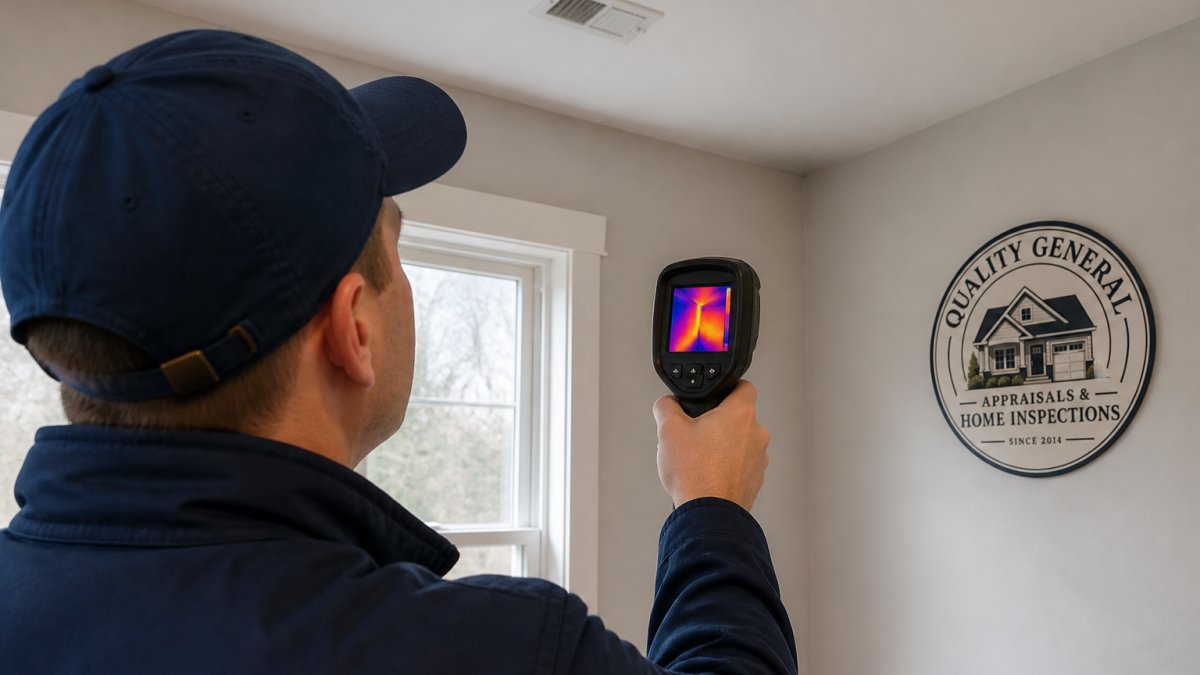
Thermal cameras capture infrared radiation. Every object emits heat. The camera converts that heat into a visual map. Warmer areas appear red or orange. Cooler areas show blue or purple. This color contrast tells the story of what's happening inside your walls.
The importance of infrared imaging in inspections goes beyond curiosity. It catches real problems that standard visual inspections miss. Water leaks, missing insulation, and electrical hotspots all show up clearly on thermal images.
How Thermal Imaging Works in Home Inspections
Thermal cameras detect infrared radiation that human eyes cannot see. The camera has a special sensor that picks up heat energy. It translates that energy into an image you can understand.
The process is straightforward:
- The inspector points the camera at walls, ceilings, and floors
- The thermal sensor reads temperature differences across the surface
- The camera displays colors representing those temperatures
- Warmer spots appear as red, orange, or yellow
- Cooler spots appear as blue, green, or purple
Temperature differences reveal hidden problems. A wet wall reads cooler than a dry wall. Missing insulation shows up as a cold zone. An overheating electrical outlet appears as a hot spot.
Professional thermal cameras used for thermal imaging home inspection work in any lighting condition. Darkness doesn't matter. Daylight doesn't affect the reading. This makes them ideal for basements, attics, and crawl spaces where visibility is poor.
The technology is passive. The camera doesn't emit radiation. It simply reads what's already there. This makes it safe for all building materials and occupants.
Common Problems Detected by Infrared Cameras
Moisture and Water Intrusion
Water intrusion is one of the most damaging problems in homes. It causes rot, mold, and structural decay. But water damage often hides behind walls where you cannot see it.
Thermal imaging exposes hidden moisture. Wet materials hold moisture longer than dry materials. This moisture keeps those areas cooler. The thermal camera picks up that temperature difference immediately.
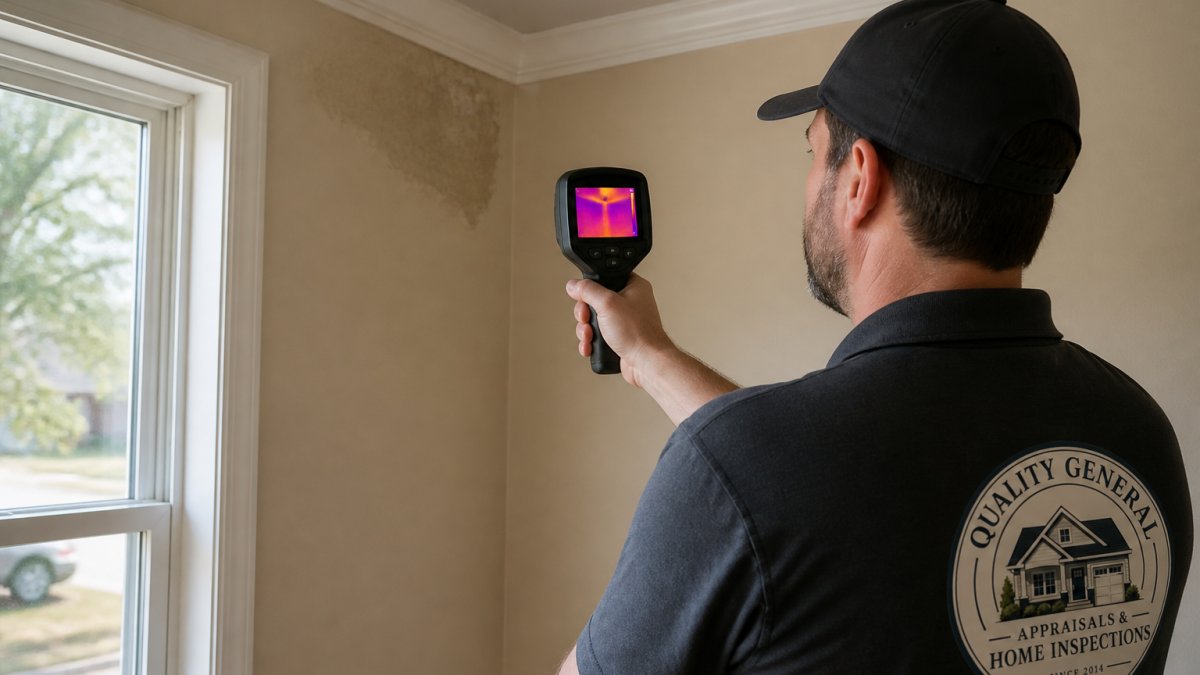
Common moisture sources that thermal imaging reveals:
- Roof leaks above ceilings
- Window and door frame leaks
- Foundation cracks allowing groundwater
- Plumbing leaks inside walls
- Condensation in attic spaces
- Basement seepage
Once we identify a wet area using thermal imaging, we can recommend targeted repairs. Catching water damage early prevents mold growth and structural problems.
Insulation Gaps and Air Leaks
Proper insulation keeps your home comfortable and reduces energy costs. But insulation often has gaps. Installation mistakes leave voids. Settling can create holes over time.
Thermal imaging shows exactly where insulation is missing. Cold air from outside creates temperature differences on interior walls. These show up clearly on thermal images as blue or purple zones.
Air leaks waste energy and money. They let warm air escape in winter. They let cool air escape in summer. Finding these leaks with thermal imaging helps you fix them before they cost you thousands.
Common insulation problems we find:
- Gaps around electrical outlets
- Incomplete coverage in attic corners
- Missing insulation above basement rim joists
- Voids in exterior walls
- Poor sealing around windows and doors
Electrical and HVAC Issues
Electrical problems can create fire hazards (CPSC Launches Program to Prevent Home Electrical Wiring System Fires). An overloaded circuit or failing component generates heat. This heat shows up on thermal images before it becomes dangerous.
HVAC systems also reveal themselves through thermal imaging. Blocked ducts show as cold spots. Leaking ducts waste conditioned air. Thermal imaging helps technicians locate these problems quickly.
Electrical hotspots we detect include:
- Overloaded circuit breakers
- Failing connections in panels
- Overheating outlets or switches
- Damaged wiring creating resistance
- Transformer problems
HVAC issues visible on thermal images:
- Blocked or leaking supply ducts
- Return air leaks
- Uneven temperature distribution
- Ductwork in unconditioned spaces
Can Thermal Imaging Detect Mold in Your Home
Can thermal imaging detect mold? Not directly. Thermal cameras cannot identify mold by sight. But they reveal the conditions where mold grows.
Mold thrives in damp environments (the CDC). If thermal imaging shows moisture, mold risk is high. We then recommend dedicated mold testing to confirm the presence of mold.
This combination approach works best:
- Thermal imaging finds moisture
- Professional mold testing confirms mold presence
- You get a complete picture of the problem
Moisture is mold's best friend. Where there's persistent dampness, mold follows. Thermal imaging catches that dampness before mold becomes visible. This early warning gives you time to act.
Quality General Appraisals & Home Inspections offers both thermal imaging and professional mold testing. We can identify moisture issues and verify whether mold is present. This protects your family's health and your home's value. Beyond moisture and mold, structural integrity often depends on understanding the termite inspection process to ensure that hidden pests are not compromising the wood framing of your property.
Understanding Your Thermal Imaging Inspection Report
A good thermal imaging report explains what the images show. It connects the thermal images to real problems. It tells you what to do next.
Your report should include:
- Thermal images of problem areas
- Written explanations of what each image shows
- Location information (which wall, which room, which floor)
- Severity assessment (minor, moderate, urgent)
- Recommended next steps
- Estimated repair priorities
The best reports use side-by-side comparisons. A regular photo next to a thermal image helps you understand what you're looking at. This makes the report easy to share with contractors or your real estate agent.
Quality General Appraisals & Home Inspections provides detailed photo-based reports. We include thermal images with clear explanations. You'll understand exactly what we found and why it matters.
Infrared Inspection Limitations You Should Know
Thermal imaging is powerful, but it has boundaries. Understanding these limits helps you use the technology wisely.
Thermal imaging cannot see through solid objects. The camera reads surface temperatures only. If a problem is buried deep inside a wall cavity, thermal imaging might not detect it. Surface-level moisture shows clearly. Deep internal problems may not.
Thermal cameras need temperature differences to work. If a wall is the same temperature throughout, the camera sees nothing. This happens in well-insulated, climate-controlled homes. The technology works best when temperature contrasts exist.
Thermal imaging doesn't identify the specific cause. A cool spot on a wall could mean missing insulation or water damage. The image shows the symptom, not the diagnosis. Professional interpretation is essential.
Outdoor thermal imaging has limitations. Sun exposure heats surfaces. Rain cools them. Time of day affects readings. This makes outdoor thermal imaging less reliable than indoor imaging.
Thermal cameras cannot detect all electrical problems. A circuit running at normal load won't show heat. Only overheating components appear on thermal images.
Despite these limits, thermal imaging remains one of the most valuable inspection tools available. It finds problems that visual inspection misses.
Why Infrared Imaging Matters for Your Home Purchase
Buying a home is the biggest financial decision most people make. You need complete information about the property's condition.
The importance of infrared imaging in inspections becomes clear when you discover hidden problems before closing. A thermal image might reveal roof leaks, insulation gaps, or moisture damage that could cost thousands to repair.
Standard home inspections rely on visual observation. Inspectors look at what they can see. They tap on walls. They check obvious systems. But they cannot see inside walls or behind insulation.
Thermal imaging fills that gap. It reveals what's hidden. It gives you use in negotiations. If the inspection finds problems, you can ask for repairs or a price reduction.
For homebuyers in Springfield and Southwest Missouri, thermal imaging provides peace of mind. You know what you're buying. You can make an informed decision.
Real estate agents also benefit from thermal imaging reports. A clean thermal imaging report builds buyer confidence. It demonstrates that the property has been thoroughly evaluated.
Conclusion
Infrared imaging inspections transform home inspections. It reveals problems that remain invisible to the human eye. It protects your investment and your family.
Quality General Appraisals & Home Inspections uses advanced thermal imaging technology as part of comprehensive home inspections throughout Springfield and Southwest Missouri. Our team combines thermal imaging with professional expertise to deliver detailed, photo-based reports. We identify moisture issues, insulation gaps, electrical problems, and HVAC concerns before they become expensive repairs.
When you're buying, selling, or maintaining a home, thermal imaging matters. It catches problems early. It gives you the information you need to make confident decisions about your property.
Schedule a thermal imaging inspection with Quality General Appraisals & Home Inspections today. Let our certified inspectors use advanced technology to evaluate your home's true condition. Get the detailed report and peace of mind you deserve.
Frequently Asked Questions
What is infrared imaging in a home inspection?
Infrared imaging, also called thermal imaging, uses specialized cameras to detect heat patterns in your home. These cameras show temperature differences in walls, ceilings, and electrical systems that the human eye cannot see. Inspectors use thermal imaging to identify moisture problems, insulation gaps, air leaks, and electrical hotspots that could indicate serious issues. It's a non-invasive tool that reveals hidden problems without damaging your home.
Can thermal imaging detect mold in homes?
Thermal imaging cannot directly identify mold itself, but it can detect the moisture conditions where mold thrives. If a thermal camera shows unexplained cold spots or temperature differences, it often signals moisture accumulation behind walls or in attics. Once moisture is detected, mold testing or a visual inspection by a professional can confirm whether mold is actually present. Thermal imaging is the first step that prompts further investigation.
What are the main limitations of infrared imaging?
Infrared cameras cannot see through solid materials like drywall or insulation, so they only detect surface temperature patterns. They also cannot diagnose the exact cause of a temperature difference without additional investigation. Weather conditions, recent heating or cooling, and the time of day affect readings. Additionally, thermal imaging cannot detect all types of problems, some electrical issues or structural damage may not produce visible heat signatures. Professional judgment is always needed to interpret results correctly.
Is infrared imaging included in a standard home inspection?
Infrared imaging is not always included in every home inspection package. Many standard inspections focus on visible components and basic systems. However, thermal imaging adds significant value by detecting hidden moisture, insulation failures, and electrical concerns that could cost thousands to repair. When buying a home, asking whether an inspector uses thermal imaging is important, it shows whether they use advanced technology to protect your investment.