how-to
Do I Need Mold Testing Before Buying a House?
Table of Contents
- When Is Mold Testing Necessary Before Buying?
- Signs of Mold in a House You Should Never Ignore
- Standard Home Inspection vs Mold Inspection: Key Differences
- Mold Inspection Cost: What Factors Determine the Price?
- DIY vs. Professional Mold Testing: Accuracy and Limitations
- How a Mold Inspection Protects Your Purchase and Negotiation
- Conclusion: Making Your Mold Testing Decision
- Frequently Asked Questions
Last Updated: September 9, 2026
When Is Mold Testing Necessary Before Buying?
Making a home purchase contingent on a professional mold assessment is a prudent step whenever you observe indicators of moisture problems or have health sensitivities. Mold testing is the process of sampling and analyzing a property for fungal growth, typically through air quality testing or surface sampling, to determine spore counts and identify species present. The decision to test should not be based on fear, but on specific, observable conditions that suggest a problem exists within the home.
We recommend scheduling a mold test if you notice a musty odor, see visible mold growth, or discover a history of water damage in the property. Homes with poor attic ventilation, a damp crawl space, or an aging HVAC system are prime candidates for moisture intrusion and subsequent fungal issues. If you or your family members have allergies or respiratory conditions, testing provides peace of mind by verifying the indoor air quality before you commit to the largest purchase of your life. Below, we'll show you exactly how to evaluate your risk and when to make the call.
Signs of Mold in a House You Should Never Ignore
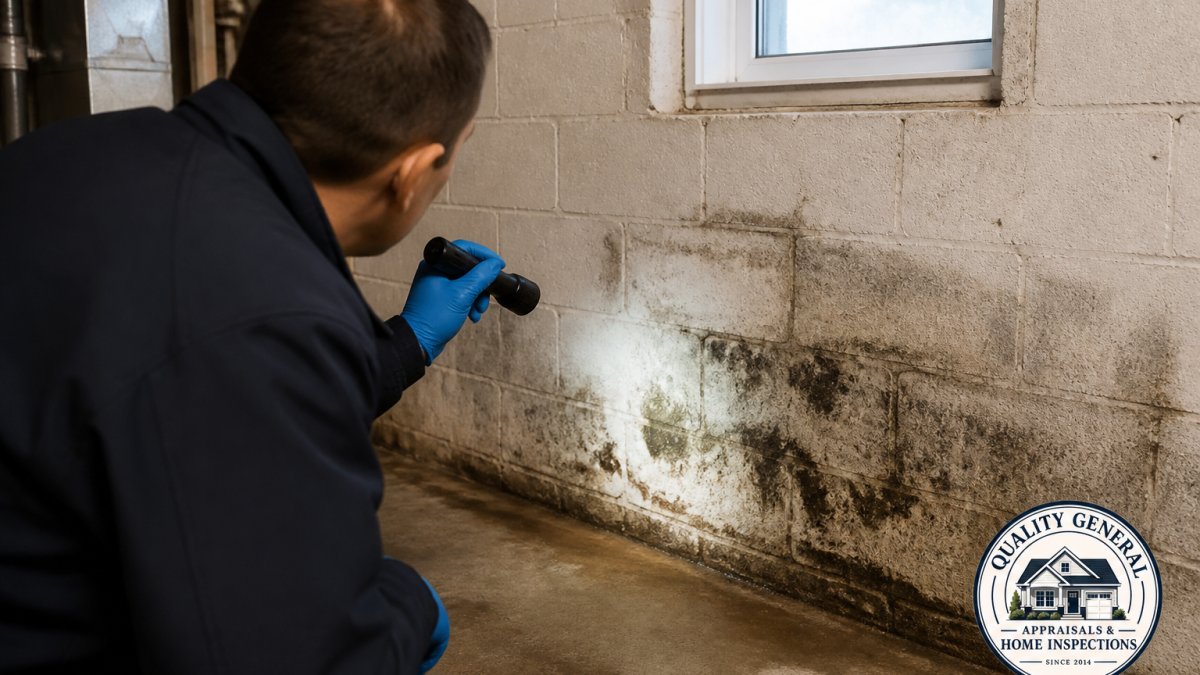
Certain visual and olfactory cues during a showing should immediately raise your concern about hidden fungal growth. Water stains on ceilings or walls, peeling paint, or bubbling drywall often indicate an active moisture problem that mold will exploit. A persistent musty odor is one of the most reliable indicators that mold is present, even when you cannot see it, as it often hides behind walls or under flooring (the EPA).

Pay close attention to the areas where moisture collects: around windows, under sinks, and in the corners of basements. If the home has a crawl space, check for standing water or damp insulation, as these conditions are a breeding ground for bioaerosols. A common mistake is dismissing a small patch of discoloration as a cosmetic issue; what starts as a minor leak can compromise structural integrity and your family's health if left unaddressed.
Standard Home Inspection vs Mold Inspection: Key Differences
A standard home inspection evaluates the property's overall condition, but it does not include laboratory analysis for mold. The general home inspection report will note visible water damage, moisture intrusion, and obvious fungal growth, yet it stops short of identifying the mold species or measuring spore counts in the air. This is where a dedicated mold inspection becomes essential.
The distinction is critical for buyers: a standard home inspection is a visual assessment of structural and mechanical systems, while a mold inspection is a specialized environmental test. During a mold inspection, a professional collects air samples from inside and outside the home to establish a baseline, then compares the spore count to determine if indoor levels are elevated. Surface sampling may also be used to identify the specific type of fungal growth present, which is vital for understanding potential health risks and planning a remediation strategy.
| Inspection Type | What It Covers | Lab Analysis | Best For |
|---|---|---|---|
| Standard Home Inspection | Structural systems, roof, electrical, plumbing | No | Overall property condition |
| Mold Inspection | Air quality testing, surface sampling, moisture mapping | Yes | Confirming suspected fungal growth |
Mold Inspection Cost: What Factors Determine the Price?
The cost of a mold inspection is not a fixed number; it varies based on the size of the home, the number of samples collected, and the depth of the investigation required. Several factors influence the final price, including the accessibility of the crawl space or attic, the need for specialized equipment like infrared imaging to detect hidden moisture, and the geographic region where the property is located.
Generally, pricing depends on the square footage of the home and the specific testing methods employed. A basic air quality test may be more affordable, while a comprehensive assessment that includes surface sampling and a detailed lab analysis will cost more. For an accurate quote tailored to the property you are considering, it is best to contact a certified inspection service directly.
DIY vs. Professional Mold Testing: Accuracy and Limitations
Many buyers consider at-home mold test kits as a budget-friendly alternative to hiring a professional, but the accuracy of these kits is questionable. DIY kits often involve exposing a petri dish to the air and sending it to a lab, but they lack the controlled methodology of professional testing, which includes establishing an outdoor baseline and using calibrated equipment (the CDC). Without proper chain of custody and a clear sampling strategy, the results from a DIY kit can be misleading and difficult to interpret.
Professional mold testing provides a level of reliability that DIY kits cannot match. Certified inspectors use specialized tools to measure relative humidity, detect moisture intrusion behind walls, and collect samples that are analyzed by accredited laboratories. A professional report provides actionable data, including spore counts and species identification, which you can use to negotiate repairs or a price reduction with the seller. When your family's health and a significant financial investment are on the line, the accuracy of professional testing is worth the investment.
How a Mold Inspection Protects Your Purchase and Negotiation
A professional mold inspection is a powerful tool for protecting your financial interests, but its value extends far beyond simple negotiation. In a real estate transaction, a mold report is a legal document that can shift liability, trigger disclosure obligations, and even affect your ability to secure homeowners insurance. Understanding these mechanisms is critical to using the report effectively.
The Legal Leverage of a Mold Report
When a mold inspection reveals elevated spore counts or water intrusion, you are no longer negotiating from a position of ignorance. You have documented evidence of a defect. This report becomes the basis for a formal request for remediation or a price reduction. If the seller refuses to address the issue, the report gives you the legal standing to walk away from the deal without penalty, provided your purchase agreement includes a mold contingency.
More importantly, the report creates a paper trail. If the seller agrees to fix the problem but does so inadequately, or if they fail to disclose a known issue that your inspection uncovers, you have a legal basis for recourse after closing. In many states, a seller is required to disclose known material defects, and mold is often considered one. If a seller knowingly conceals a mold problem and you discover it later, the inspection report is your primary evidence in a potential legal claim for damages.
The Insurance Angle Most Buyers Miss
A mold inspection report can directly impact your ability to get homeowners insurance. Many insurance carriers are now scrutinizing properties for prior water damage and mold claims. An inspection report that shows a history of water damage or active mold growth can lead to higher premiums, policy exclusions for mold damage, or even a denial of coverage altogether.
Conversely, a clean mold inspection report, one that shows no elevated spore levels or active moisture issues, can be a powerful asset when shopping for insurance. It provides documented proof that the property is not a high-risk liability, which can help you secure a standard policy without mold-specific exclusions. Before you finalize a purchase, ask your insurance agent whether a mold inspection report will affect your eligibility or premium. This is a step most buyers overlook, but it can save you from a post-closing shock when your policy is issued with unexpected limitations.
Post-Remediation Clearance Testing: The Final Step
If your negotiation results in the seller agreeing to remediate the mold, your work is not done. You must insist on post-remediation clearance testing. This is a separate inspection performed after the mold removal is complete to verify that the contamination has been successfully eliminated and that spore counts have returned to normal levels.
Clearance testing is the only way to prove the remediation was effective (iicrc.org). Without it, you are relying on the seller's word that the problem is fixed. A clearance test involves air sampling in the affected areas and comparing the results to an outdoor baseline. If the indoor spore count is still elevated, the remediation was incomplete, and you have the right to demand further work. This step is rarely covered in buyer guides, but it is the single most important safeguard you can add to your purchase agreement when mold is discovered.
The Negotiation Playbook: What to Ask For
When the inspection report comes back positive, you have several options. The most common requests are:
- Seller-paid remediation: The seller hires a licensed remediation company to remove the mold and fix the underlying moisture issue.
- A credit at closing: You handle the remediation yourself after closing, using funds credited from the seller. This gives you control over the contractor and the process.
- A price reduction: The purchase price is lowered to reflect the cost of remediation and the diminished value of the property.
Each option has trade-offs. Seller-paid remediation is convenient, but you have no control over the quality of the work. A credit at closing is often the better choice because you can vet the remediation company and ensure the work meets industry standards. Whatever you choose, make sure the agreement is in writing and that the clearance testing requirement is explicitly stated in the contract.
Conclusion: Making Your Mold Testing Decision
Deciding whether to order a mold test before buying a house comes down to the specific conditions of the property and your personal risk tolerance. If you see visible mold growth, smell a musty odor, or know the home has suffered water damage, testing is not an optional extra; it is a necessary step to protect your health and your investment. Even in homes that appear clean, a professional assessment can uncover hidden moisture issues that could lead to costly remediation and structural problems down the line.
For buyers in Springfield and Southwest Missouri, Quality General Appraisals & Home Inspections offers reliable, veteran-owned service you can trust. Our team uses advanced technology, including infrared imaging, to detect hidden moisture and deliver same-day reports with clear, quality photographs. We provide specialized testing for mold, radon, and termites, ensuring you have the full picture before you close. SCHEDULE NOW and make a confident decision about your home purchase.
Frequently Asked Questions
Should I test for mold when buying a house?
Yes, if you see signs of mold, smell a musty odor, or the home has a history of water damage. Testing is also wise if you have young children, elderly family members, or anyone with respiratory conditions. For homes without any visible issues, a standard home inspection may be enough. When in doubt, order a mold inspection to avoid inheriting a costly and potentially hazardous problem.
Does a standard home inspection include mold testing?
No. A standard home inspection evaluates the property's structural and mechanical systems, like the roof, foundation, and HVAC. It is a visual assessment. Mold inspection is a specialized service that involves air quality testing and surface sampling to detect elevated spore counts. You will need to schedule this separately with a provider that offers mold testing.
What are the first signs of mold in a house?
The first signs are usually a persistent musty odor and small black, green, or white spots on walls, ceilings, or grout. Look for water stains, peeling paint, or warped drywall, which indicate moisture intrusion. Check areas like the crawl space, attic, and around windows. If you notice these, especially after recent rain, schedule a mold inspection immediately.
Can I use a mold inspection to negotiate the price?
Absolutely. A professional report with lab analysis showing elevated spore counts gives you negotiation leverage. You can request the seller pay for remediation, provide a credit at closing, or lower the asking price. The inspection contingency in your contract typically allows you to request repairs or credits for issues like mold found during the due diligence period.