 ultimate-guide
Sewer Scope Inspections: What Springfield Buyers Need
Table of Contents
- What a Sewer Scope Actually Shows You
- Why a Sewer Lateral Inspection in Springfield MO Matters Before Closing
- Common Sewer Line Issues in Older Homes
- Sewer Camera Inspection Cost: What Drives the Number
- What to Do After the Scope Finds a Problem
- How to Read the Report and Ask Better Questions
- Frequently Asked Questions
Last Updated: October 2, 2026
What a Sewer Scope Actually Shows You
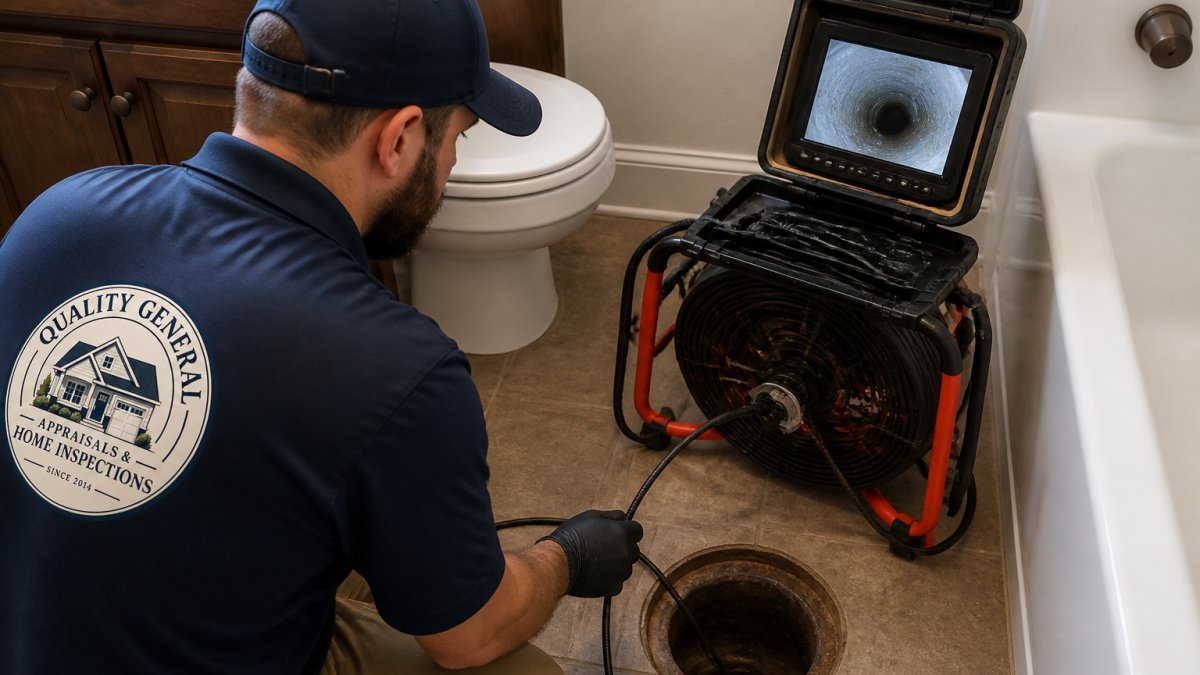
A sewer scope is a video inspection of the underground pipe that carries wastewater from your home to the municipal main or septic system. A technician feeds a flexible camera through an exterior cleanout and records the inside of the line from the house to the connection point. For buyers in Springfield, Missouri, that footage answers a question no walkthrough can: is the pipe under this yard intact, or is it quietly failing?
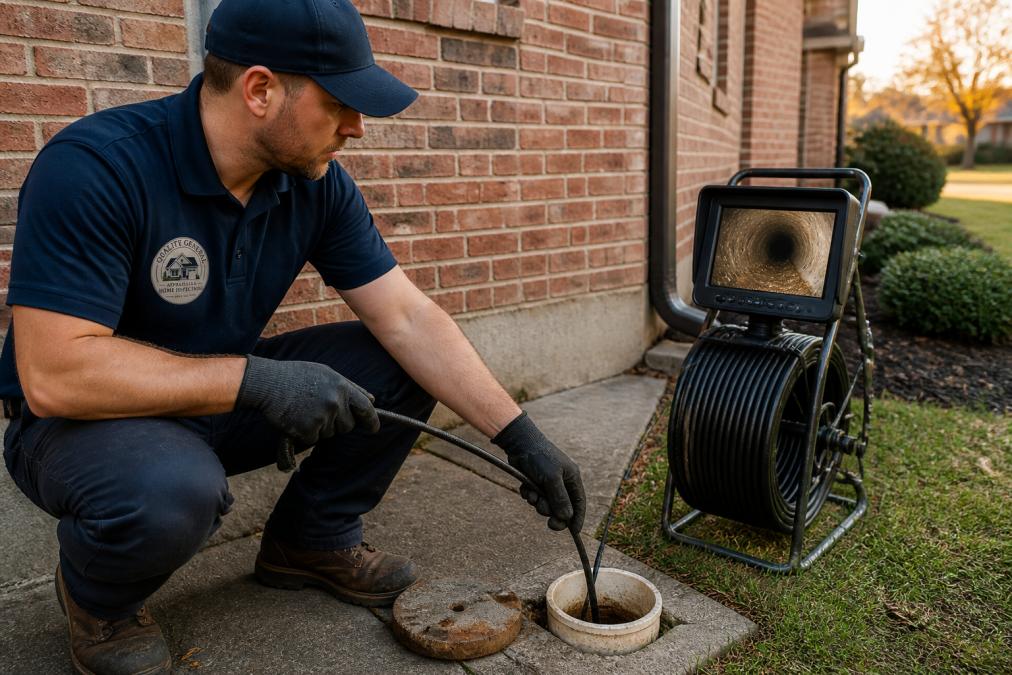
At Quality General Appraisals & Home Inspections, we run sewer scopes alongside full home inspections so buyers get the whole picture in one report. The camera reveals cracks, root intrusion, bellies where waste pools, and offset joints that no amount of looking at the lawn will show you. It is the difference between hoping the line is fine and knowing it.
How the Camera Moves Through the Line
The technician starts at the cleanout, the access point where the drain line exits the foundation. From there, the camera travels the lateral, the stretch of pipe between the house and the public main, while a locator above ground marks depth and position.
- Push rod and reel: the camera rides a stiff cable that advances through the pipe
- Sonar locator: traces the camera head so the technician can mark the line's path and depth on the surface
- Recording unit: captures continuous video with footage markers
- Findings log: notes the distance to each defect, so repairs can be located precisely
A clean run takes roughly 20 to 30 minutes. A line with heavy roots or blockages takes longer because the camera may need to be worked past debris.
Why a Sewer Lateral Inspection in Springfield MO Matters Before Closing
A sewer lateral inspection in Springfield MO protects the single most expensive buried system on the property, and it is the one item a standard home inspection does not cover. The lateral belongs to the homeowner, not the city, which means repairs come out of your pocket after closing.
That ownership detail catches buyers off guard. The city maintains the main line in the street; everything from your foundation to that main is yours. When a lateral fails, excavation, pipe replacement, and yard restoration are the buyer's responsibility.
Springfield's housing stock makes this more than a theoretical concern. Neighborhoods with mid-century homes often still have original clay tile laterals, and decades of settling and root growth take a toll. A scope before closing gives you use: you can negotiate repairs, ask for a credit, or walk away with information instead of surprises.
Common Sewer Line Issues in Older Homes
Clay tile, cast iron, and orangeburg pipe show up again and again in pre-1980 homes. Each material fails differently, and a scope tells you which failure you are dealing with.
Clay tile cracks at the joints as soil shifts. Roots slip into those gaps and grow into dense mats that catch waste and cause repeat clogs. Cast iron rusts from the inside out, and the pipe eventually scales or collapses. Orangeburg, a tar-paper pipe used in some mid-century builds, deforms and crushes under load; when a scope finds it, replacement is usually the only real fix.
Other findings we document:
- Belly: a low spot where the pipe sags and waste pools instead of draining
- Offset joint: sections that have shifted out of alignment, snagging debris
- Crack or hole: entry points for roots and soil
- Blockage: grease, debris, or roots restricting flow
- Improper connection: a lateral tied into the main at the wrong angle
What Springfield's Soil and Tree Roots Do to Clay Pipe
Springfield sits on clay-heavy soil that swells when wet and shrinks when dry. That seasonal movement flexes buried pipe, and old clay joints are the first to give. Add mature trees, and you have the two forces behind most lateral failures in the area.
Maples, willows, and oaks send roots toward the moisture and nutrients inside a cracked lateral. Once inside, roots act like a net, catching everything that flows past. A line that drains fine in dry weather can back up fast after a heavy spring rain.
Sewer Camera Inspection Cost: What Drives the Number
Sewer camera inspection cost depends on the length of the run, access to a cleanout, and how far the camera has to travel. A straightforward scope on a home with an accessible cleanout is a minor add-on to a full inspection. A property with no cleanout, a long lateral, or heavy root blockage takes more time and equipment, which affects the total.
We do not publish flat pricing because every property is different, and a quote that ignores your layout would be guesswork. Call Quality General Appraisals & Home Inspections for current pricing on a sewer scope in Springfield and surrounding communities.
| Factor | Why It Changes the Job | What to Expect |
|---|---|---|
| Lateral length | Longer runs take more camera time | Higher end of the range |
| Cleanout access | No cleanout means pulling a toilet or cutting in | Added labor |
| Root or debris blockage | Camera must be worked past obstructions | Longer visit |
| Line depth | Deep lines need more locating work | Added time |
| Bundled with inspection | Scope added to a full home inspection | Most efficient option |
What to Do After the Scope Finds a Problem
A problem on the scope is not automatically a dealbreaker. The right response depends on what the camera found and how severe it is.
Minor root intrusion is often handled with mechanical cutting, and a follow-up scope confirms the line is clear. A single cracked section may be spot-repaired with a sleeve. A collapsed or crushed run usually means excavation and replacement of that segment. Offset joints and bellies range from monitoring to repair depending on how much they affect flow.
Your options as a buyer:
- Negotiate a repair credit and handle the work after closing
- Ask the seller to fix it before closing, with a re-scope to verify
- Request a price reduction that reflects the cost of the repair
- Walk away if the scope reveals a systemic problem across the whole lateral
Get a repair estimate from a licensed plumber before you finalize anything.
How to Read the Report and Ask Better Questions
A good sewer scope report includes video footage, still photos of each defect, and distance markers so every finding can be located. If your report is a paragraph of vague notes with no images, ask for the full documentation.
Questions worth asking your inspector:
- How far did the camera travel, and did it reach the main?
- What material is the lateral, and what condition is it in?
- Where exactly is each defect, measured from the cleanout?
- Is the line flowing, or is there standing water and debris?
- Do you recommend a plumber's evaluation, and for which findings?
Frequently Asked Questions
What is a sewer scope inspection?
A sewer scope is a video inspection of the underground pipe that carries wastewater from your home to the municipal main or septic system. An inspector feeds a waterproof camera through an exterior cleanout or roof vent and records the full run on video. The footage reveals cracks, root intrusion, bellies, offsets, and blockages that a standard visual home inspection cannot see. In Springfield and Southwest Missouri, where many homes sit on older clay laterals, the scope often uncovers problems before they become the buyer's expense.
How much does a sewer camera inspection cost in Southwest Missouri?
Pricing depends on the length of the line, ease of access, and whether the scope is bundled with a full home inspection. A scope on its own typically runs less than the cost of repairing even a minor line break, which is why many buyers treat it as inexpensive insurance. Because rates vary by provider and property, contact Quality General Appraisals & Home Inspections directly for a current quote rather than relying on a generic online figure.
What can a sewer camera find in a home's lateral line?
The camera can document root masses entering through pipe joints, cracks in clay or cast iron, low spots where waste collects, misaligned joints from ground movement, and partial or full blockages. It also shows whether the line connects properly to the city main. In older Springfield neighborhoods, root intrusion and deteriorated clay tile are the two most frequent findings. The recorded video gives you proof of condition, which matters when you negotiate repairs or request a seller credit.
Who is responsible for sewer line repairs in Springfield, Missouri?
In most cases, the homeowner is responsible for the lateral line running from the house to the connection at the city main or property line. That means a damaged lateral found during your inspection period becomes a negotiating point, not something the city automatically fixes. Buyers should confirm the exact responsibility boundary for the specific address, since easements and municipal rules can vary. A sewer scope during the inspection contingency window gives you time to request repairs or walk away.
What happens if a sewer scope finds a blockage or damage?
First, get the video and a written summary of the location and severity. Minor root intrusion can often be cleared and monitored, while collapsed pipe or significant bellies usually require excavation and replacement. Use the findings to request a repair, a seller credit, or a price adjustment before your contingency deadline. If the seller declines and the damage is serious, you can cancel under your inspection contingency. Quality General provides same-day, photo-based reports so you have documentation in hand quickly.