 ultimate-guide
Understanding Termite Inspection Report Findings
Table of Contents
- What a Termite Inspection Report Tells You
- How to Read a Termite Inspection Report
- Active vs. Previous Termite Activity
- Interpreting a Termite Inspection Report Sample
- What to Do After a Termite Inspection
- Common Questions About Termite Reports
- Frequently Asked Questions
Last Updated: October 13, 2026
What a Termite Inspection Report Tells You
A termite inspection report is a detailed document that reveals whether termites are present in a home, where they're located, and what damage they've caused. At Quality General Appraisals & Home Inspections, we understand that understanding termite inspection report findings is critical for homebuyers and sellers in Springfield and Southwest Missouri, where termite activity is a real concern for property owners.
The report serves several purposes. It protects your investment by identifying active infestations before they cause structural damage. It satisfies lender requirements, many mortgage companies won't finance a property without a termite clearance. And it gives you concrete information to negotiate repairs or pricing with sellers.
A professional termite inspection report documents the inspector's findings using standardized terminology, photographs, and specific locations marked on the property. The report answers three essential questions: Are termites present? If so, where are they? And what damage have they done?
How to Read a Termite Inspection Report
Common Findings and What They Mean
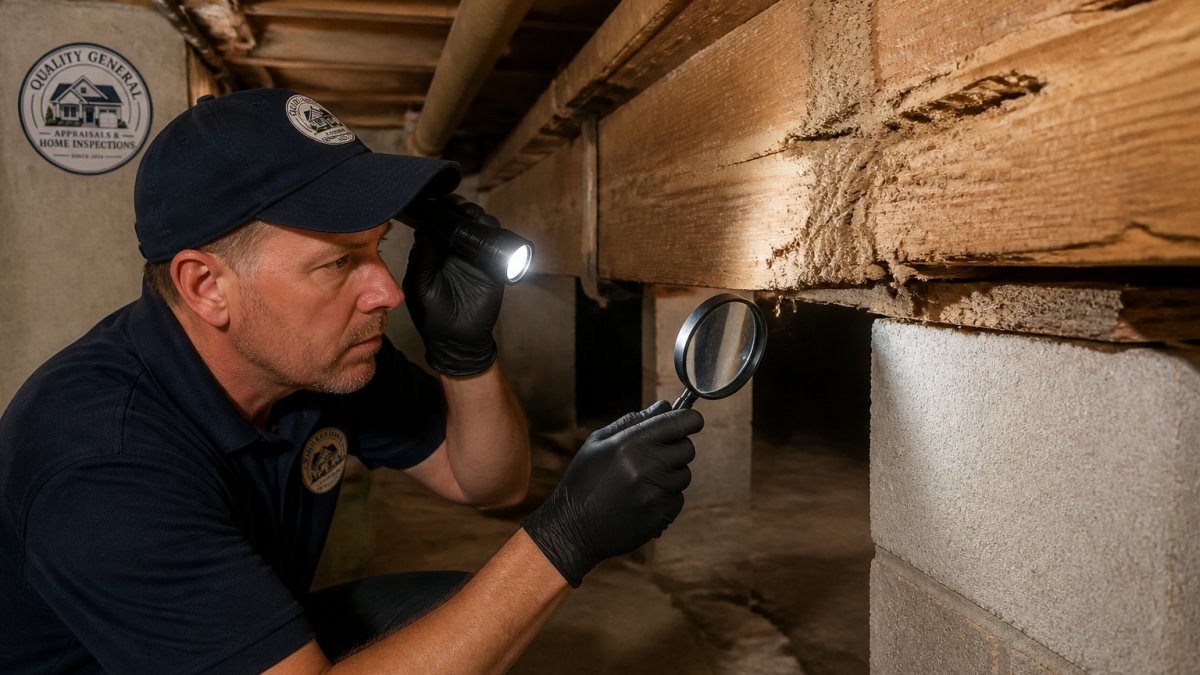
Reading a termite inspection report requires understanding the terminology inspectors use. When you see "mud tubes," this refers to shelter tubes that termites build from soil to wood sources. These are hollow tunnels made of mud and debris, typically found along foundation walls or wooden support beams. Mud tubes indicate termite activity, either active or past, and warrant closer inspection.
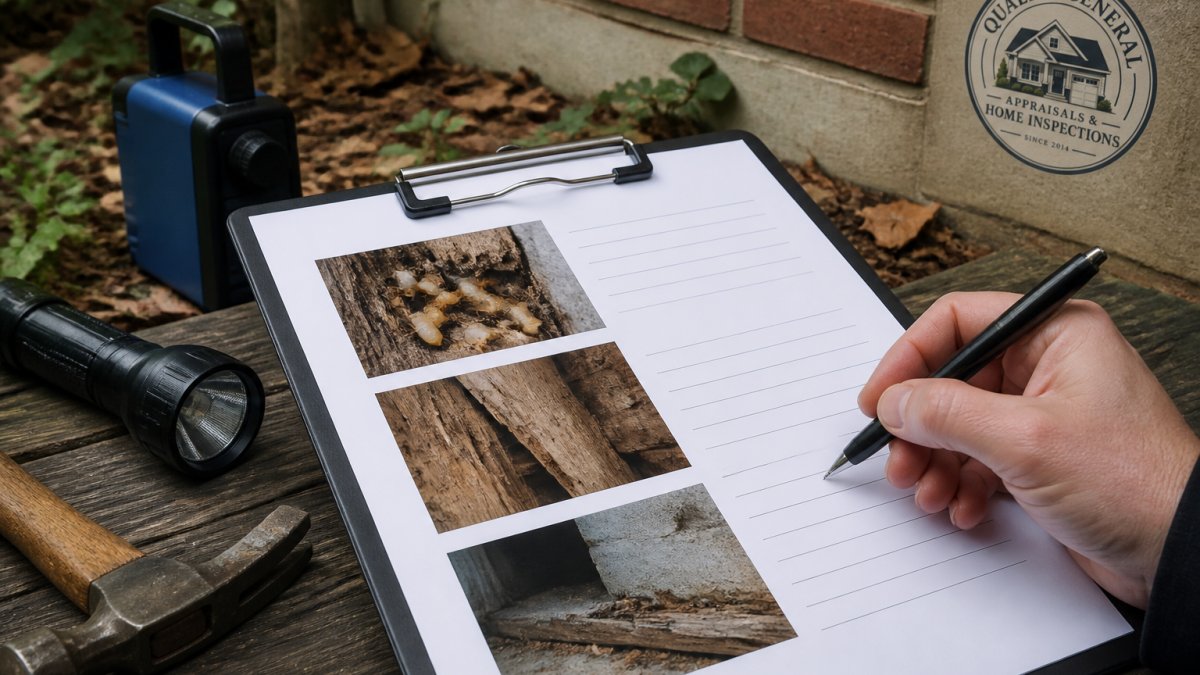
"Wood damage" or "wood deterioration" describes areas where termites have consumed wood fibers, weakening the structural integrity. Light damage might be surface-level galleries (tunnels inside the wood). Severe damage can compromise load-bearing elements like floor joists or support posts. The inspector will note the extent and location of damage in detail.
"Conducive conditions" is an important phrase that appears in many reports. This means the property has conditions that attract or support termites, such as wood-to-soil contact, moisture issues, or accessible crawlspaces. Identifying conducive conditions helps you understand why termites were attracted to the property in the first place.
Some reports mention "evidence of previous treatment." This indicates the property has been treated for termites in the past. The report should specify the type of treatment and when it occurred. This information helps you understand the property's termite history.
Understanding the Report Layout
Most termite inspection reports follow a consistent structure. The first section summarizes the inspector's findings in plain language, whether termites are present and the overall condition of the property. This executive summary is your starting point.
The second section provides detailed findings by location. The inspector divides the property into areas: foundation, crawlspace, attic, interior walls, and exterior surfaces. For each area, they document what they observed, including photographs and measurements when relevant.
The third section lists recommendations. These might range from "no treatment needed" to "immediate treatment recommended" to "monitor for activity." Understanding these recommendations helps you decide on next steps with sellers, lenders, or pest control professionals.
Many reports include a "limitations" section that explains what the inspector could not access or observe. This is important because termites can be present in areas the inspector couldn't reach. A thorough crawlspace inspection is far more reliable than a visual inspection from above.
Active vs. Previous Termite Activity
The distinction between active and previous termite activity is the most critical finding in your termite inspection report. Active termites mean the infestation is ongoing right now. You'll see signs like live termites, fresh mud tubes, or wood damage with exposed galleries that appear newly created. Active infestations require immediate treatment.
Previous termite activity means termites were present at some point but are no longer active. You might see old mud tubes that have hardened and crumbled, wood damage that appears weathered, or evidence of old treatment. Previous activity doesn't necessarily mean the property is termite-free going forward, but it does mean there's no immediate infestation.
The inspector determines activity status by examining the condition of mud tubes and wood damage. Fresh mud tubes are moist and intact. Old tubes are dry, brittle, and often collapsed. Similarly, fresh wood damage shows exposed wood with clear galleries, while old damage appears stained and settled.
Interpreting a Termite Inspection Report Sample
Understanding a real-world example helps clarify how to interpret findings. Imagine a report that states: "Active subterranean termites observed in crawlspace. Multiple mud tubes present on foundation wall and wood support posts. Evidence of wood damage to rim joist and floor joist. Conducive conditions: excessive moisture, wood-to-soil contact."
This report tells you:
- Termites are actively present right now
- They're using mud tubes to access the wood structure
- They've already damaged structural elements
- The property has moisture and construction issues that invited the infestation
The next section of the sample report might recommend: "Immediate professional treatment required. Recommend moisture remediation and removal of wood-to-soil contact to prevent reinfestation."
This tells you the property needs both pest control treatment and structural modifications. Your lender will likely require proof of treatment before approving the loan.
A different sample report might state: "Previous subterranean termite activity observed. Old mud tubes present but inactive. No live termites observed. No active wood damage identified. Property previously treated in 2022."
This report indicates lower risk. The property had termites years ago, they were treated, and there's no current activity. You might proceed with the purchase but monitor the property for signs of reinfestation.
What to Do After a Termite Inspection
When Repairs Are Needed
If your termite inspection report identifies active termites, your first step is to notify your lender and the seller. Most purchase agreements allow you to request treatment or price reductions based on inspection findings. The seller may agree to hire a licensed pest control professional to treat the infestation before closing.
If you're purchasing the home, you might negotiate to have the seller complete treatment and provide proof of a warranty. Many pest control treatments come with a one-year or longer warranty that protects you if termites return. This warranty is valuable protection for your investment.
For previous termite activity with no current infestation, you have more flexibility. Some buyers proceed with purchase and plan their own monitoring. Others request the seller provide documentation of previous treatment and proof that the infestation was resolved. If conducive conditions remain, like moisture problems or wood-to-soil contact, you should budget for repairs to prevent future infestations.
Negotiating with Sellers or Lenders
Armed with a clear termite inspection report, you can have informed conversations with sellers and lenders. If the report shows active infestation, most sellers will agree to treatment because they know lenders won't approve the loan otherwise. The key is getting everything in writing, treatment dates, warranty details, and proof of completion.
For reports showing previous activity, negotiations depend on the property's condition and your risk tolerance. If the property is otherwise sound and the previous treatment was recent, you might accept the property as-is. If the previous treatment was years ago and conducive conditions persist, you might request repairs or a price reduction.
Lenders typically require either active treatment or proof that previous treatment was completed within a certain timeframe, often within the last year or two. Check with your lender about their specific requirements before negotiating with the seller.
Common Questions About Termite Reports
What's the difference between a termite inspection and a full home inspection?
A termite inspection focuses specifically on termite activity and damage. A full home inspection covers all major systems, roof, electrical, plumbing, HVAC, and structural elements. Many homebuyers get both. Quality General Appraisals & Home Inspections provides comprehensive home inspections that can include termite assessment as part of the structural evaluation, giving you a complete picture of the property's condition.
Can termites hide from an inspector?
Termites can be present in areas the inspector cannot access. A thorough crawlspace inspection catches most infestations, but termites deep inside walls or in inaccessible attic spaces might go undetected. This is why the report's limitations section is important, it tells you what areas couldn't be fully inspected.
How often should I get a termite inspection?
If you're buying a home, get one before closing. After purchase, many homeowners schedule annual inspections, especially in areas with high termite pressure like Southwest Missouri. If you've had treatment, follow the pest control company's monitoring recommendations.
What does it mean if the report says "no visible evidence of termites"?
This means the inspector found no active infestation or signs of previous activity. It's a good finding, but it doesn't guarantee termites won't appear in the future. Regular monitoring and maintenance of conducive conditions help prevent problems.
A clear understanding of your termite inspection report helps you to make confident decisions about your home purchase or property investment. Whether the report shows active infestation, previous activity, or no evidence of termites, you now have the information you need to negotiate, plan repairs, or proceed with confidence. If you're buying a home in Springfield or Southwest Missouri and need a thorough property evaluation that includes termite assessment, Quality General Appraisals & Home Inspections provides detailed, photo-based reports that explain findings in clear language. Our experienced inspectors use advanced equipment to identify issues before they become costly problems. Schedule a comprehensive home inspection today and get the clarity you need for your real estate decision.
Frequently Asked Questions
What does a termite inspection report tell you?
A termite inspection report documents the presence or absence of termites, wood-destroying insects, and related damage. It identifies active infestations, past activity, moisture issues, and structural concerns. The report shows where inspectors found evidence, the extent of damage, and recommendations for treatment or repair. This information helps you understand the property's condition and plan next steps before purchase or closing.
What is the difference between active and previous termite activity?
Active termite activity means termites are currently present and feeding in the structure. Signs include mud tubes, live insects, or fresh wood damage. Previous activity shows past infestations that have been treated or are no longer active. The distinction matters because active infestations require immediate treatment, while previous activity may only need monitoring or repair of damaged wood. Your inspector will clearly mark which type was found.
How do I know if the termite inspection report is accurate?
Work with a licensed pest inspector or certified home inspector trained in termite detection. Quality inspectors use multiple methods: visual examination, moisture meters, and sometimes thermal imaging or probe tools. They document findings with photographs and detailed notes. If you're buying a home, a thorough inspection protects your investment. Ask your inspector to explain their findings and show you evidence during the walkthrough.
What should I do if a termite report finds evidence of termites?
If active termites are found, contact a licensed pest control company for treatment options and estimates. If previous activity is noted, have a pest control professional assess whether monitoring or preventive treatment is needed. For structural damage, consult a contractor for repair quotes. In a purchase transaction, you can negotiate with the seller for repairs, treatment, or a price reduction. Document all findings and next steps in writing.
Can a home pass inspection if termite damage is found?
Yes. A home can still be purchased even if termite damage exists. What matters is the extent of damage and whether the infestation is active or past. Minor previous damage with no active termites may not prevent closing. Significant structural damage or active infestations typically require treatment and repair before lenders will approve the mortgage. Your inspector and real estate agent can advise whether findings are deal-breakers.
How long is a termite inspection report valid?
Most lenders and real estate transactions accept termite inspection reports valid for 30 to 90 days from the inspection date. Some require reports dated within the last 30 days before closing. Check with your lender or real estate agent for their specific requirements. If you're not closing within that window, you may need a new inspection to satisfy financing or contract terms.